Elliptic Curve
An elliptic curve is a mathematical curve used in elliptic curve cryptography (ECC) for generating secure public-private key pairs in blockchains, like secp256k1 in Bitcoin.
What Is a Elliptic Curve?
A Elliptic Curve is a smooth, mathematical curve defined by the equation y² = x³ + ax + b, where a and b are constants. Despite the name, it does not form an ellipse. Cryptographers use these curves in elliptic curve cryptography (ECC) to create secure keys.
Points on the curve form a group under a special addition operation. Add two points by drawing a line through them; the third intersection point reflects over the x-axis to yield the sum. Scalar multiplication repeats this addition. A private key is a secret scalar; multiply it by a generator point to get the public key. Security relies on the elliptic curve discrete logarithm problem (ECDLP), which is computationally infeasible to reverse.
Elliptic curves matter in blockchain because they enable strong security with small keys. A 256-bit ECC key matches the strength of a 3072-bit RSA key. This efficiency suits resource-limited devices. Bitcoin uses the secp256k1 curve for signatures. Other blockchains adopt curves like ed25519 for faster operations.
Key characteristics include finite fields for discrete points and careful parameter selection to resist attacks. Common types appear in synonyms: ECC for the cryptography method, secp256k1 for Bitcoin, and ed25519 for high-speed signing.
A public key is a cryptographic key used to receive transactions in a blockchain. It is shared openly, while the corresponding private key remains confidential.
Read full definitionBitcoin (BTC) is the first decentralized cryptocurrency, launched in 2009. It uses blockchain technology for secure, peer-to-peer digital transactions without intermediaries.
Read full definitionReal-World Examples
Example 1: Bitcoin Key Generation
Wallet software generates a random 256-bit private key. It performs scalar multiplication on the secp256k1 elliptic curve's generator point G to compute the public key: PublicKey = private_key * G. Users then derive a Bitcoin address from this public key.
Example 2: Signing a Transaction
To authorize a Bitcoin transfer, select a random nonce k. Compute point R = k * G on the secp256k1 curve. Combine R with a hash of the transaction and the private key to form an ECDSA signature. Nodes verify this using only the public key.
Example 3: Hardware Wallet Security
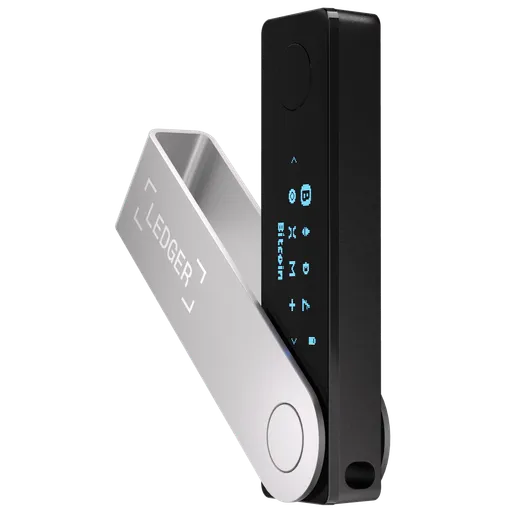
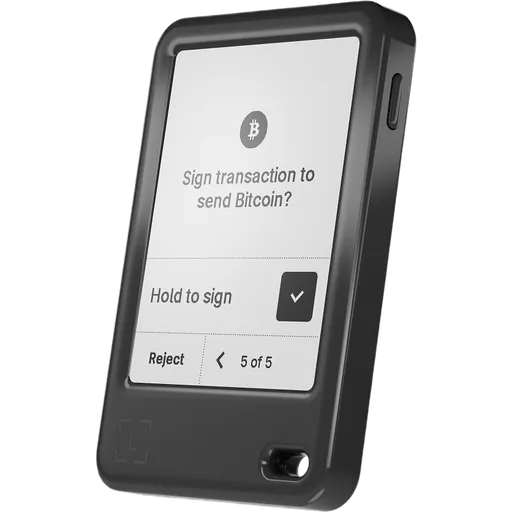
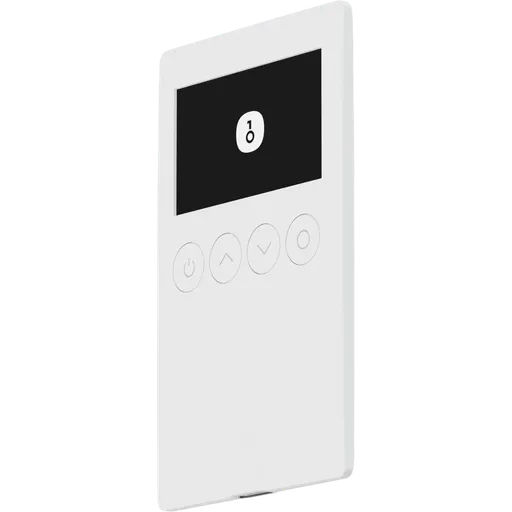
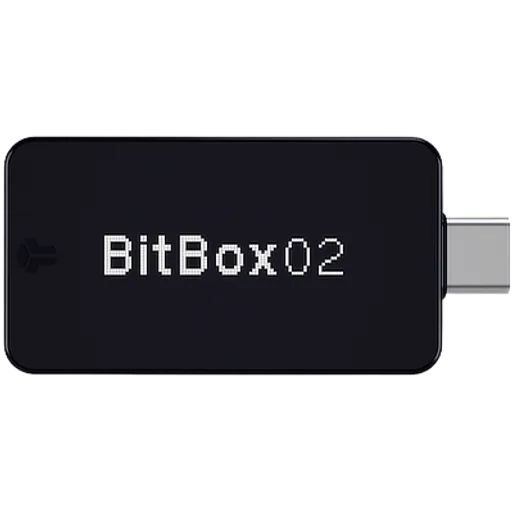
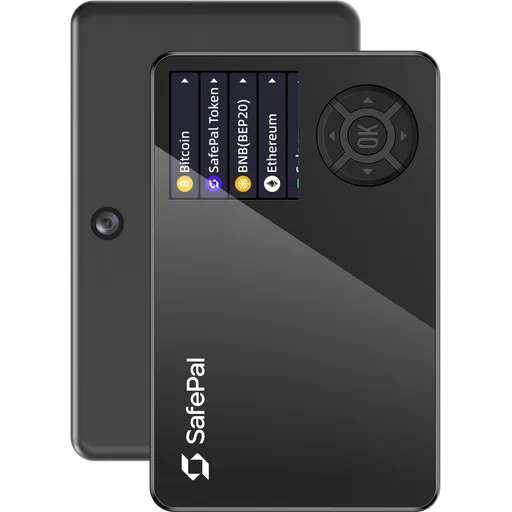
Ledger devices generate private keys on the secp256k1 elliptic curve within a secure element chip. To sign a transaction, the device computes the signature internally and sends only the result to the host computer. This keeps the private key offline.
Example 4: Faster Signatures with ed25519
Blockchains like Solana use the ed25519 elliptic curve for transaction signing. It enables high-speed verification: a private key multiplies the base point to yield the public key, supporting thousands of signatures per second on resource-constrained nodes.
Bitcoin (BTC) is the first decentralized cryptocurrency, launched in 2009. It uses blockchain technology for secure, peer-to-peer digital transactions without intermediaries.
Read full definitionA public key is a cryptographic key used to receive transactions in a blockchain. It is shared openly, while the corresponding private key remains confidential.
Read full definitionA nonce is a sequential number in a blockchain transaction that ensures transactions from the same account process in order and prevents replay attacks.
Read full definitionA digital signature is a cryptographic method that uses a private key to sign blockchain transactions, verifiable with the public key to prove authenticity and prevent tampering.
Read full definitionLedger is a brand of hardware wallets that securely store cryptocurrency private keys offline, such as the Ledger Nano series.
Read full definitionSolana is a high-performance layer-1 blockchain platform that enables fast, low-cost transactions using Proof of History and Proof of Stake. Its native token is SOL.
Read full definitionBase is an Ethereum Layer 2 network developed by Coinbase. It uses optimistic rollups for scalable, low-cost transactions.
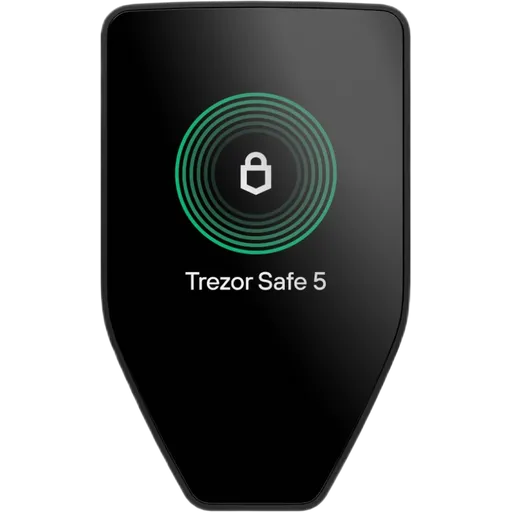
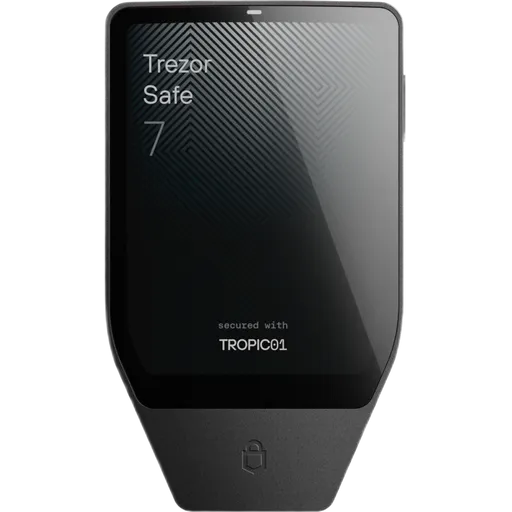
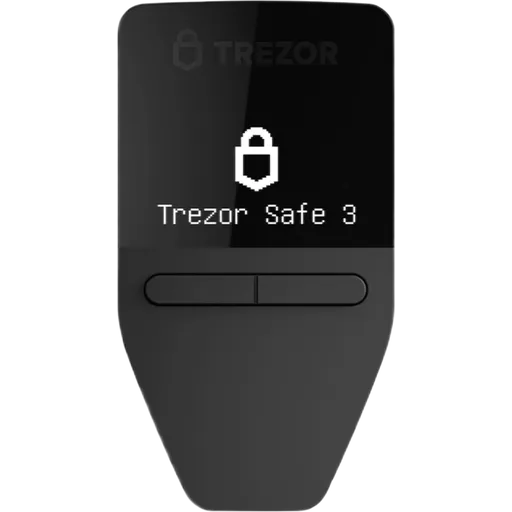
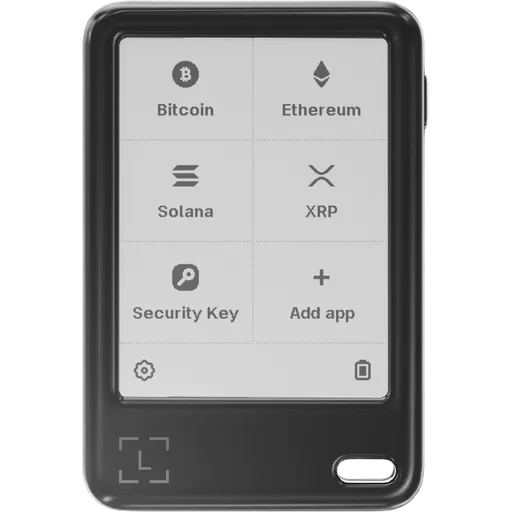
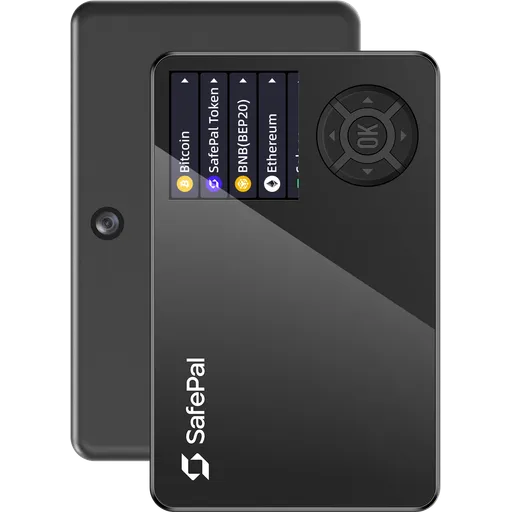
Read full definitionHardware Wallets by Elliptic Curve
Browse wallets grouped by this feature






Affiliate link — we may earn a commission at no extra cost to you. Learn more
Ready to Choose a Secure Wallet?
Use our tools to find the right hardware wallet for your needs.
Start Wallet Finder