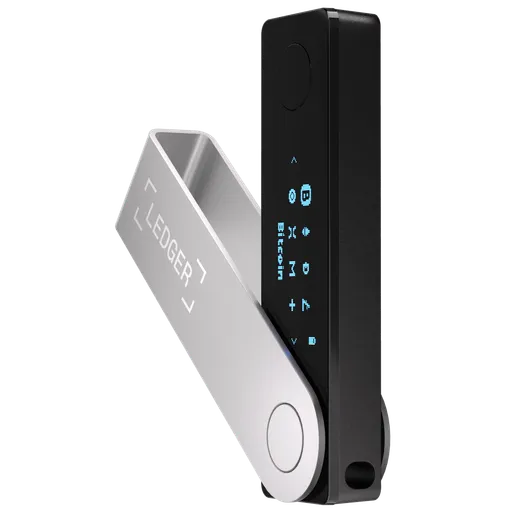
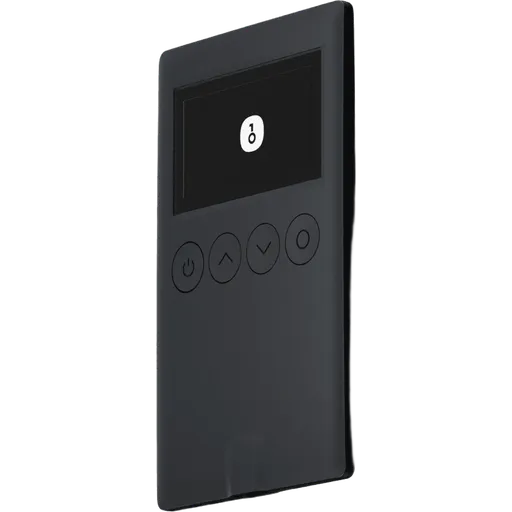
Blockstream Jade Core ($99): the 2026 Jade with a 1.9-inch screen, Genuine Check and a blind PIN oracle, but no camera and no battery, so it signs only over USB-C or Bluetooth.
By the WalletInsights editorial team
We may earn a commission from purchases through affiliate links. This does not affect our ratings. Affiliate Disclosure
The Blockstream Jade Core, launched in April 2026 at $99, is essentially a Jade Plus without camera and battery. It keeps the 1.9-inch screen, Genuine Check and the open-source firmware with its blind PIN oracle, but connects only over USB-C or Bluetooth and needs USB power to run. There is no secure element and no QR air-gap. It suits Bitcoin users who always sign with a phone or computer and want a larger screen for less than a Plus.
Security Warning
Avoid buying from unofficial marketplaces — counterfeit risk.
Known incidentsFirmware 1.0.41 (2026-08-22; released after Jade Core's launch) was a security release following responsible disclosures (Spiral's Loupe, Kvazar and others). Blockstream's changelog does not detail the issues.
PIN storageBlind PIN oracle: server stores only a hash of the PIN plus a nonce; AES-256 key split between Jade and oracle
The Jade Core is one of two Jade models with Genuine Check; the older Jade Classic lacks it. Each Jade built by Blockstream carries a unique device key whose public key Blockstream signs, and the check confirms during setup, or later through Blockstream's web app, that the unit came from Blockstream. Blockstream presents it as protection against counterfeit devices and 'evil-maid' tampering. It is offered, not enforced: the device works without it.
Beneath that, the security model is the same as on every Jade. There is no hardware secure element. The recovery phrase is encrypted with an AES-256 key split between the device and a blind PIN oracle, which stores only a hash of the 6-digit PIN plus a nonce. After three wrong entries, both sides delete their part of the key. Blockstream runs the oracle by default and publishes the server code, so users can run their own. Blockstream argues that this makes a stolen device safe from physical key extraction while keeping it fully open source. The trade-off is that physical-attack resistance depends on the oracle scheme and on the ESP32-S3's secure boot and flash encryption rather than on a certified chip, and that the default setup involves a Blockstream server.
The firmware is open source, signed by Blockstream and reproducible for the Core's board, with rollback prevention. Blockstream's comparison table lists Anti-Exfil for the Core. Firmware 1.0.41, released in August 2026 after the Core's launch, was a security release following responsible disclosures; Blockstream has not detailed the issues, and no third-party audit of Jade has been published.
SecurityKey Factor
According to Blockstream's launch blog, the standard Core setup shows a 12-word recovery phrase, which Blockstream calls the master backup. It is a standard BIP39 phrase, so it can be restored on other compatible wallets, and the shared firmware also accepts 24 words. Blockstream advises writing it down offline and points to its own metal backup. What the Core cannot do is SeedQR: it has no camera to scan one, and Blockstream does not document a SeedQR export for it, so the QR backups of the Classic and Plus are not part of this model's documented features.
The Jade line's advanced setup adds a BIP39 passphrase for hidden wallets, each of which needs its own backup, and the firmware can derive BIP85 child phrases from the main seed. Multisig configurations can be registered and backed up on the device, so receive and change addresses can be verified. These are firmware features: the help center does not yet describe them on the Core, and their availability rests on Blockstream's statement that every Jade runs identical firmware.
A forgotten PIN cannot be reset. After three wrong entries, the device and the oracle delete their key parts, and access returns only through the recovery phrase. Blockstream keeps no seed backup, and no Shamir or other multi-share scheme is supported. Blockstream's comparison table lists optional stateless use for the Core, but does not explain how it works on a model without a camera.
Recovery & backups
Power shapes daily use of the Core more than any other spec. It has no battery, and Blockstream's launch blog says to power it with a standard USB-C cable. On Windows, macOS and Linux that same cable carries the connection to the Blockstream app. On Android the Core connects over USB-C or Bluetooth, and on iOS over Bluetooth only; in both cases the device still has to draw power over USB-C while it is paired, so a phone-based setup needs a USB power source nearby.
The 1.9-inch, 320 × 170 colour IPS screen matches the Jade Plus and is clearly larger than the Classic's 1.14-inch panel, which helps when checking full addresses and amounts before confirming. Blockstream describes it as built for straightforward transaction verification. The body measures 65 × 30 × 12 mm and weighs 20 g, and the only finish is black plastic. During PIN entry, the firmware starts each digit at a random value, so someone watching the presses cannot infer the PIN.
Firmware updates run through the Blockstream app over USB or Bluetooth, through a web portal in a WebSerial-capable browser, or from the command line; Blockstream lists no air-gapped update method for the Core. The device interface is English only, while the app is multilingual. Our assessment of setup and day-to-day use is an editorial estimate based on the screen and firmware the Core shares with the Jade Plus, not a hands-on test.
Usability / UX
Blockstream's comparison table marks the Core as Bitcoin-only. Its own store page does not mention Liquid; support for the sidechain follows from the shared firmware and from blockstream.com/jade, which describes the line as a hardware wallet for Bitcoin and Liquid, so we treat it as likely rather than confirmed for this model. Lightning in the Blockstream app uses an app-held key and is not signed by the Jade.
The native companion is the Blockstream app, which offers coin control and buying bitcoin directly into self-custody. Blockstream's Jade page lists third-party wallets such as Sparrow, Nunchuk, Electrum, Liana, BlueWallet, Keeper, Wasabi and Bitcoin Safe, and HWI support connects Jade to Bitcoin Core. That list is published for the Jade line, not specifically for the Core. On the Core, every one of these connections has to run over USB-C or Bluetooth.
Camera-based workflows do not apply: the Core cannot scan PSBTs, show an xpub as an animated QR code or exchange multisig configurations by QR, and file exports need the USB storage support of the Jade Plus. On-device multisig registration with BIP48 paths, BIP67 sorted multisig and registered descriptors is part of the firmware, and the Core signs PSBTs passed over its cable or Bluetooth link. For a multisig signer that should never touch a computer, the Classic or the Plus fits better within the lineup.
Ecosystem & integrations
The Core never connects to the internet itself; all traffic runs through the companion app. The link between device and PIN oracle is encrypted after an ECDH key exchange, and Blockstream says the oracle knows neither the PIN nor the wallet's addresses. Users who want no dependence on Blockstream's infrastructure can run the open-source oracle themselves and reach it over Tor.
Where the Core differs from the other Jades is exposure. Every transaction has to pass over USB-C or Bluetooth to a connected computer or phone, because there is no QR mode that keeps the device physically isolated. Bluetooth is off by default, and Blockstream publishes a no-radio firmware variant for the Core's board, which leaves USB as the only link. Blockstream does not document encryption of the USB or Bluetooth connection to the host. Anti-Exfil guards against keys leaking through signature nonces, which matters more on a device that is always connected.
The Blockstream app requires no account or personal data and supports Tor and a connection to one's own node. Its analytics are opt-in and can be switched off in the settings, after which no usage data is sent. Coin control is available in the app and in Sparrow, while CoinJoin is not documented for Jade.
Privacy
Blockstream sells the Jade Core in a single black plastic version for $99, the same price on its store, on blockstream.com/jade and in its Q2 2026 update. Launched on 28 April 2026, it sits between the Jade Classic at $79 and the Jade Plus, which starts at $149 in plastic and costs $169 in metal.
Against the Plus, the Core keeps the 1.9-inch screen, the ESP32-S3 chip and Genuine Check, and saves $50 by dropping the camera, the 280 mAh battery and air-gapped transfers by SD card or USB drive. Against the Classic, it costs $20 more and swaps the camera and battery for a larger screen, a newer chip and Genuine Check. Since all three run the same firmware and oracle model, the choice depends less on security than on how you sign: always connected, or by QR.
For someone who always signs with a phone or computer next to the device, the Core pays only for what that workflow uses. For anyone who may later want an air-gapped setup, it offers no upgrade path, since the missing camera and battery cannot be added. As a 2026 model, it also has a shorter public track record and, for now, no model-specific help-center guides.
Price & value
Blockstream's firmware repository describes the Jade Core's board as a Jade Plus without camera and battery, and that sums the device up. For $99 it keeps what matters for connected use: a 1.9-inch, 320 × 170 screen for checking addresses, the ESP32-S3 chip, Genuine Check and the same open-source firmware as the rest of the line. It also drops what defined earlier Jades. Without a camera there is no QR signing and no SeedQR, and without a battery the device runs only while it is powered over USB-C, including when it is paired by Bluetooth. Because the Core is new and Blockstream's help center does not cover it yet, its firmware-level features, such as passphrase wallets, BIP85, multisig registration, the PIN oracle and Tor, are documented through Blockstream's statement that every Jade runs identical firmware rather than through guides written for this model. As with every Jade, there is no secure element and no published third-party audit.
Choose this wallet if:
You sign from a desktop wallet over USB-C, or from an Android or iOS phone over Bluetooth, and do not need an air-gap.
You want Genuine Check and the 1.9-inch screen for $50 less than a plastic Jade Plus.
You want open-source, reproducible firmware with on-device multisig registration and Anti-Exfil.
Skip this wallet if:
You want to sign air-gapped: the Jade Classic ($79) signs by QR, and the Jade Plus (from $149) adds transfers by SD card or USB drive.
You want a device that runs on its own battery, away from a USB power source.
You prefer vendor documentation written for your exact model over a shared-firmware statement.
✓Our Verdict
Blockstream's firmware repository describes the Jade Core's board as a Jade Plus without camera and battery, and that sums the device up. For $99 it keeps what matters for connected use: a 1.9-inch, 320 × 170 screen for checking addresses, the ESP32-S3 chip, Genuine Check and the same open-source firmware as the rest of the line. It also drops what defined earlier Jades. Without a camera there is no QR signing and no SeedQR, and without a battery the device runs only while it is powered over USB-C, including when it is paired by Bluetooth. Because the Core is new and Blockstream's help center does not cover it yet, its firmware-level features, such as passphrase wallets, BIP85, multisig registration, the PIN oracle and Tor, are documented through Blockstream's statement that every Jade runs identical firmware rather than through guides written for this model. As with every Jade, there is no secure element and no published third-party audit.
Choose this wallet if:
You sign from a desktop wallet over USB-C, or from an Android or iOS phone over Bluetooth, and do not need an air-gap.
You want Genuine Check and the 1.9-inch screen for $50 less than a plastic Jade Plus.
You want open-source, reproducible firmware with on-device multisig registration and Anti-Exfil.
Skip this wallet if:
You want to sign air-gapped: the Jade Classic ($79) signs by QR, and the Jade Plus (from $149) adds transfers by SD card or USB drive.
You want a device that runs on its own battery, away from a USB power source.
You prefer vendor documentation written for your exact model over a shared-firmware statement.
Ready to buy Blockstream Jade Core?
We may earn a commission if you purchase through our links. This doesn't affect our editorial independence.
Impermanent loss happens when asset prices in a liquidity pool diverge from external markets, reducing the value of liquidity providers' holdings compared to simply holding the assets.
Jade is a hardware wallet from Blockstream, designed to securely store Bitcoin private keys offline, ensuring safe transactions and protection from online threats.
Firmware Attestation is the process of verifying the authenticity of a device's firmware to ensure it has not been tampered with, commonly used in hardware wallets for security.
A public key is a cryptographic key used to receive transactions in a blockchain. It is shared openly, while the corresponding private key remains confidential.
Recovery is the process of restoring access to a cryptocurrency wallet using its seed phrase or mnemonic backup if the original wallet is lost or inaccessible.
A nonce is a sequential number in a blockchain transaction that ensures transactions from the same account process in order and prevents replay attacks.
Secure Boot is a security feature that ensures only trusted software runs on a device by verifying its integrity during startup, preventing unauthorized code execution in crypto systems.
Anti-Klepto Protocol is a blockchain security mechanism that prevents unauthorized data exfiltration by verifying nonces to ensure transaction authenticity and integrity.
A backup in cryptocurrency is a secure copy of a wallet's seed phrase or private keys. It enables recovery of funds if the original wallet is lost or damaged.
BIP39 is a standard for generating mnemonic seed phrases that are used to create deterministic wallets and securely back up cryptocurrency private keys.
A metal backup is a durable metal plate or device engraved with a cryptocurrency wallet's seed phrase, providing fireproof and waterproof protection for offline key storage.
A passphrase is an additional security layer for cryptocurrency wallets, acting as a 25th word in the BIP39 seed phrase, protecting access to hidden wallets.
BIP85 is a Bitcoin Improvement Proposal for generating child seeds from a master seed, providing deterministic entropy for use in secure key derivation and backup processes.
Multisig (multi-signature) is a security feature that requires multiple private keys to authorize a transaction, enhancing protection against unauthorized access in blockchain networks.
Bitcoin (BTC) is the first decentralized cryptocurrency, launched in 2009. It uses blockchain technology for secure, peer-to-peer digital transactions without intermediaries.
A sidechain is a separate blockchain connected to a main chain, allowing for faster transactions or experimentation without affecting the main chain's security.
Coin Control is a feature that allows users to manually select which unspent transaction outputs (UTXOs) to use in a transaction, giving more control over privacy and fees.
Self-custody means users control their own private keys to manage cryptocurrency assets directly, without third-party custodians. It embodies 'not your keys, not your coins.'
Electrum is a lightweight Bitcoin wallet that allows users to store, send, and receive Bitcoin securely. It is known for its speed and low resource usage.
BlueWallet is a mobile Bitcoin wallet that allows users to securely store, send, and receive Bitcoin. It offers features like Lightning Network support and multi-sig capabilities.
XPUB is an extended public key (xpub) in hierarchical deterministic (HD) wallets. It derives child public keys and addresses from a master public key without exposing private keys.
QR Code Signing is a method used in cryptocurrency transactions where a QR code is generated to confirm and sign a transaction, enhancing security and user convenience.
In cryptocurrency, a swap is the direct exchange of one token for another on a blockchain, often via decentralized exchanges (DEXs) without intermediaries.
A companion app is a software application used to manage and interact with cryptocurrency wallets or blockchain networks, typically offering features like transactions and security controls.
UTXO (Unspent Transaction Output) is a unit of cryptocurrency from a previous transaction that remains unspent and serves as input for new transactions in blockchains like Bitcoin.
CoinJoin is a privacy technique in cryptocurrency where multiple users combine their transactions, making it harder to trace individual senders and receivers.
Blockstream Jade Core does not use a Secure Element, but relies on other security measures. Your private keys never leave the device and all transactions must be physically confirmed on screen. The firmware is open-source, meaning security researchers worldwide can audit the code for vulnerabilities.
What if Blockstream goes out of business?
Blockstream's firmware is open-source — even if the company disappears, the community can maintain the software. Your seed phrase works with any BIP39-compatible wallet, so your funds are always recoverable.
What if I lose my Blockstream Jade Core?
Your cryptocurrency is stored on the blockchain, not on the device. If you lose your Blockstream Jade Core, you can recover full access using your seed phrase on any compatible wallet.
How long will Blockstream Jade Core receive security updates?
Blockstream actively maintains Blockstream Jade Core with regular firmware updates.
What is the difference between Jade Core and Jade Plus?
Blockstream's firmware repository describes the Core's board as a Jade Plus without camera and battery. Both have a 1.9-inch screen, the ESP32-S3 chip, Genuine Check and the same firmware. The Plus (from $149) adds a camera for QR signing, a 280 mAh battery and air-gapped transfers by SD card or USB drive; the Core ($99) connects only over USB-C or Bluetooth.
Can the Jade Core sign transactions air-gapped?
No. Blockstream's comparison table lists air-gapped transactions and air-gapped firmware upgrades as unavailable on the Core. Without a camera it cannot scan or display transaction QR codes, so every signature goes through a USB-C or Bluetooth connection to a companion app. The private keys still stay on the device.
Does the Jade Core need to be plugged in?
Yes. The Core has no battery, and Blockstream's launch blog says to power it with a standard USB-C cable. On a computer the cable also carries the data connection. When pairing with a phone over Bluetooth, the device still needs power from a USB-C source.
Does the Jade Core have a secure element?
No. Like every Jade, it relies on a blind PIN oracle that Blockstream calls a virtual secure element: the key protecting the recovery phrase is split between device and oracle, which Blockstream runs by default and users can self-host. Three wrong PIN entries wipe both parts. Physical protection rests on this design, not on a certified chip.
Does the Jade Core support Liquid?
Probably, but the Core's own store page does not say so. Blockstream describes the Jade line as a wallet for Bitcoin and Liquid and states that every Jade runs identical firmware, which is the basis for Liquid support on the Core. Blockstream's help center does not cover the Core yet.
Jade Core or Jade Classic: which should I choose?
The Classic ($79) has a camera and battery, so it can sign by QR without a cable, but its 1.14-inch screen is small and it has no Genuine Check. The Core ($99) has a 1.9-inch screen, a newer chip and Genuine Check, but signs only over USB-C or Bluetooth while powered by cable. The deciding question is whether you need QR signing.
Some links on this page are affiliate links. If you purchase through them, I may earn a commission at no additional cost to you. This helps support the site and allows me to continue creating detailed, independent reviews.
Our rating methodology is evolving. Ratings and assessments will be refined as we improve our scoring framework to reflect the most accurate results.
Ready to Secure Your Crypto?
Find the right hardware wallet based on your needs, budget, and security priorities.