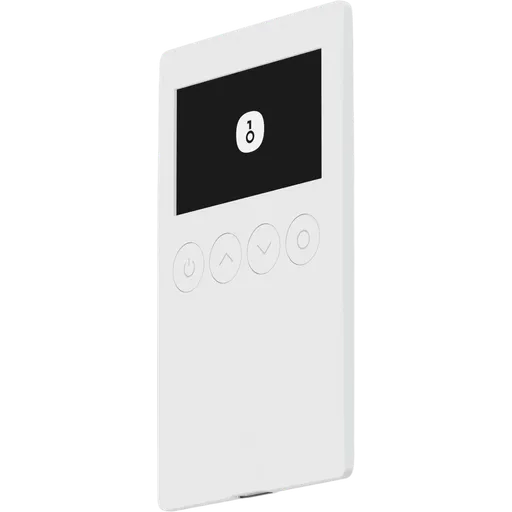
Blockstream Jade Classic ($79): the original 2021 Jade, with a camera for QR air-gapped signing, a battery, a 1.14-inch screen and a blind PIN oracle instead of a secure element.
By the WalletInsights editorial team
We may earn a commission from purchases through affiliate links. This does not affect our ratings. Affiliate Disclosure
The Blockstream Jade Classic is the original 2021 Jade, still sold for $79 and the cheapest Jade with a camera and battery for QR air-gapped Bitcoin signing. Instead of a secure element it uses Blockstream's blind PIN oracle. The trade-offs are a small 1.14-inch screen, no Genuine Check, no air-gap via SD card or USB drive and an English-only device interface. It fits Bitcoin users who want QR signing at the lowest price in the lineup.
Security Warning
Avoid buying from unofficial marketplaces — counterfeit risk.
Known incidentsFirmware 1.0.38 (2025-11-26) and 1.0.41 (2026-08-22) were published as security releases after responsible disclosures (DARKNAVY; Spiral's Loupe, Kvazar and others). Blockstream's changelog does not detail the issues.
PIN storageBlind PIN oracle: server stores only a hash of the PIN plus a nonce; AES-256 key split between Jade and oracle
Like every Jade, the Classic has no hardware secure element. Blockstream instead uses what it calls a virtual secure element: the recovery phrase is encrypted with an AES-256 key that is split between the device and a blind PIN oracle. Unlocking needs both the 6-digit PIN and the oracle. According to Blockstream, the oracle stores only a hash of the PIN plus a nonce and learns neither the PIN, the keys nor the wallet's addresses. Blockstream runs the oracle by default; the server code is open source, and users can host their own, including over Tor.
The benefit, in Blockstream's words, is that there is 'nothing of value to steal from a locked Jade by itself', and the company says the design lets the device stay fully open source. The trade-off is that resistance to physical attacks rests on this scheme and on the ESP32's secure boot and flash encryption rather than on certified hardware, and the default setup depends on a server that Blockstream operates.
One point sets the Classic apart from the newer models: Blockstream's help center states that Genuine Check, which verifies that a unit was manufactured by Blockstream, is not available for the Jade Classic. Firmware is signed by Blockstream, builds for this board are reproducible, and rollback prevention has been enabled since version 1.0.38. Blockstream published security releases in November 2025 (1.0.38) and August 2026 (1.0.41) after responsible disclosures, without detailing the issues, and no third-party audit of Jade has been published.
SecurityKey Factor
The Classic creates and restores standard BIP39 recovery phrases of 12 or 24 words, so a backup is not tied to Blockstream hardware. Besides writing the words on paper or metal, the camera makes a SeedQR backup possible: the phrase is stored as a QR code that the device can scan back in. Blockstream's store page also lists stateless signing, in which a seed is loaded only for a session instead of being stored on the device, and a duress PIN.
A BIP39 passphrase creates separate hidden wallets, and each passphrase needs its own backup: without it, the hidden wallet cannot be restored from the phrase alone. The device can also derive BIP85 child recovery phrases from the main seed, which helps when setting up separate wallets without managing unrelated backups. For multisig, Jade registers the wallet configuration on the device and can back it up, so receive and change addresses can be verified on screen.
The PIN itself cannot be recovered or reset. After three wrong entries, the device and the oracle delete their parts of the key, and the only way back is the recovery phrase. Blockstream holds no copy of the seed: the oracle keeps only part of the unlock key. No Shamir (SLIP-39) or other multi-share backup is supported, so the phrase plus any passphrase remains a single point of failure, and storing it safely matters more than the choice of medium.
Recovery & backups
The Classic measures 60 × 24 × 17 mm and, according to Blockstream's store, weighs 21 g. Its 1.14-inch, 240 × 135 colour IPS screen is the smallest in the Jade lineup; Jade Core and Jade Plus use a 1.9-inch, 320 × 170 display. On a device whose main security task is to show the address and amount before you confirm, that matters: full addresses take more room than the screen offers, and the help center explains that each field can be selected to view the full address. Navigation uses a click-wheel and a select button. The PIN is entered digit by digit, and the firmware starts each digit at a random value, so counting button presses does not reveal it.
The Blockstream app connects over USB-C on Windows, macOS and Linux, over USB-C or Bluetooth on Android, and over Bluetooth only on iOS. The 240 mAh battery lets the device run without a cable, which is what makes the QR workflow practical: the camera scans a transaction (PSBT) from the wallet app, and the Classic shows the signed result as QR codes. Firmware updates run through the app, a web portal in a WebSerial-capable browser or the command line; air-gapped firmware updates are reserved for the Jade Plus.
The device interface is available only in English, even though the Blockstream app itself is multilingual. Setup is guided by the app. Blockstream publishes no setup-time figure, and our usability assessment is an editorial estimate, not the result of a test.
Usability / UX
Blockstream describes the Jade line as Bitcoin-only with support for the Liquidsidechain. The Classic's store page lists sending and receiving Liquid assets, which runs through the Blockstream app; no altcoins or EVM networks are supported. Lightning in the Blockstream app uses a key held by the app rather than by the Jade, so it is not a Jade feature as such.
The Blockstream app is the native companion and the place to buy bitcoin; it also offers coin control. Blockstream's Jade page lists third-party wallets including Sparrow, Nunchuk, Specter, Electrum, Liana, BlueWallet, Keeper, Wasabi and Bitcoin Safe, and through HWI the Jade also works with Bitcoin Core. Supported standards include PSBT, BIP48 multisig paths, BIP67 sorted multisig, registered descriptor wallets and taproot (BIP86) single-key signing.
QR support is what separates the Classic from the Jade Core. With its camera, the Classic can export an xpub as an animated QR code, exchange multisig configurations by QR and sign PSBTs without any cable, which suits QR-based coordinators such as Specter. The Core has no camera and supports none of these QR workflows. The Jade Plus goes further and adds file-based transfers over an SD card reader or USB drive, which the Classic lacks, so multisig configurations cannot be exported to a file from it.
Ecosystem & integrations
The Jade does not connect to the internet itself; network traffic runs through the companion app. The channel to the PIN oracle is encrypted, and Blockstream states that the oracle knows nothing about the user and does not see the wallet's addresses. Users who prefer not to rely on Blockstream's server can run the open-source oracle themselves and reach it over Tor, for example on a Raspberry Pi.
The Blockstream app needs no account, email or personal documents. Its analytics programme is opt-in and can be switched off at any time in the settings, after which the app sends no usage data. The app supports Tor and a connection to one's own node. Coin control is available in the Blockstream app and in Sparrow; CoinJoin is not documented for Jade.
On radio exposure, the Classic's QR mode is its strongest privacy feature: signing by camera needs neither USB nor Bluetooth, so the device can stay physically isolated from the computer or phone holding the wallet. Bluetooth is off by default, and Blockstream publishes a no-radio firmware build for this hardware for users who want the radio gone entirely. Anti-Exfil guards against key leakage through signature nonces. Blockstream does not document encryption of the USB or Bluetooth link to the host.
Privacy
Blockstream lists the Jade Classic at a regular price of $79, and the store sometimes discounts it. At the time of writing (26 October 2026), the translucent black, green and orange versions were in stock, while blue and clear were sold out. Blockstream's Q2 2026 update describes the Classic as still in production, and it receives the same firmware releases as the newer models, including the 1.0.41 security release.
Within the lineup, the Classic is the low-cost route to QR air-gapped signing. The Jade Core costs $20 more and adds a 1.9-inch screen, the newer ESP32-S3 chip and Genuine Check, but drops the camera and the battery, so it cannot sign by QR. The Jade Plus, from $149 in plastic and $169 in metal, combines the larger screen and Genuine Check with a camera, a 280 mAh battery and air-gapped transfers by SD card or USB drive.
For $79, the Classic makes a specific trade: it keeps the air-gap and battery and gives up screen size, a newer chip and authenticity checks. Buyers who always sign over USB or Bluetooth get a larger screen with the Core; buyers who want both QR signing and a larger screen should look at the Plus. Firmware, security model and app support are the same across all three, and the Classic has the longest public history of the line, on sale since 2021.
Price & value
The Jade Classic is the only Jade under $100 that can work fully air-gapped: its built-in camera reads and displays QR codes, and its 240 mAh battery means QR signing needs no cable. It runs the same open-source firmware as the newer models, including on-device multisig registration, passphrase wallets, BIP85 child seeds, Anti-Exfil and the blind PIN oracle, which Blockstream runs by default and users can host themselves. What the $79 price leaves out is mostly hardware. The 1.14-inch, 240 × 135 screen is the smallest in the lineup, which makes long addresses and QR codes harder to read; the chip is the original ESP32 rather than the ESP32-S3; and Blockstream's Genuine Check, which verifies that a unit was built by Blockstream, is not available for it. As with every Jade, there is no secure element and no published third-party audit, so resistance to physical attacks rests on the oracle design rather than on certified hardware.
Choose this wallet if:
You want QR-based air-gapped signing for Bitcoin and accept a small screen to keep the cost at $79.
You use Sparrow or the Blockstream app and want an inexpensive signer for a multisig setup.
You value open-source firmware with reproducible builds and are comfortable with the blind-oracle model, or plan to run your own oracle.
Skip this wallet if:
You want to verify device authenticity with Genuine Check: Jade Core ($99) and Jade Plus (from $149) support it.
You prefer a larger 1.9-inch screen and do not need QR signing: Jade Core offers that screen, without camera or battery.
You want air-gapped transfers by SD card or USB drive, or air-gapped firmware updates: only Jade Plus offers them.
✓Our Verdict
The Jade Classic is the only Jade under $100 that can work fully air-gapped: its built-in camera reads and displays QR codes, and its 240 mAh battery means QR signing needs no cable. It runs the same open-source firmware as the newer models, including on-device multisig registration, passphrase wallets, BIP85 child seeds, Anti-Exfil and the blind PIN oracle, which Blockstream runs by default and users can host themselves. What the $79 price leaves out is mostly hardware. The 1.14-inch, 240 × 135 screen is the smallest in the lineup, which makes long addresses and QR codes harder to read; the chip is the original ESP32 rather than the ESP32-S3; and Blockstream's Genuine Check, which verifies that a unit was built by Blockstream, is not available for it. As with every Jade, there is no secure element and no published third-party audit, so resistance to physical attacks rests on the oracle design rather than on certified hardware.
Choose this wallet if:
You want QR-based air-gapped signing for Bitcoin and accept a small screen to keep the cost at $79.
You use Sparrow or the Blockstream app and want an inexpensive signer for a multisig setup.
You value open-source firmware with reproducible builds and are comfortable with the blind-oracle model, or plan to run your own oracle.
Skip this wallet if:
You want to verify device authenticity with Genuine Check: Jade Core ($99) and Jade Plus (from $149) support it.
You prefer a larger 1.9-inch screen and do not need QR signing: Jade Core offers that screen, without camera or battery.
You want air-gapped transfers by SD card or USB drive, or air-gapped firmware updates: only Jade Plus offers them.
Ready to buy Blockstream Jade Classic?
We may earn a commission if you purchase through our links. This doesn't affect our editorial independence.
Impermanent loss happens when asset prices in a liquidity pool diverge from external markets, reducing the value of liquidity providers' holdings compared to simply holding the assets.
Jade is a hardware wallet from Blockstream, designed to securely store Bitcoin private keys offline, ensuring safe transactions and protection from online threats.
Recovery is the process of restoring access to a cryptocurrency wallet using its seed phrase or mnemonic backup if the original wallet is lost or inaccessible.
A nonce is a sequential number in a blockchain transaction that ensures transactions from the same account process in order and prevents replay attacks.
Secure Boot is a security feature that ensures only trusted software runs on a device by verifying its integrity during startup, preventing unauthorized code execution in crypto systems.
Firmware Attestation is the process of verifying the authenticity of a device's firmware to ensure it has not been tampered with, commonly used in hardware wallets for security.
BIP39 is a standard for generating mnemonic seed phrases that are used to create deterministic wallets and securely back up cryptocurrency private keys.
A backup in cryptocurrency is a secure copy of a wallet's seed phrase or private keys. It enables recovery of funds if the original wallet is lost or damaged.
A Duress PIN is a special code used in cryptocurrency hardware wallets to trigger a response, such as wiping the device, in case of coercion or threat.
A passphrase is an additional security layer for cryptocurrency wallets, acting as a 25th word in the BIP39 seed phrase, protecting access to hidden wallets.
A hidden wallet conceals a secondary cryptocurrency wallet behind an additional passphrase on the same seed, providing plausible deniability against coercion.
BIP85 is a Bitcoin Improvement Proposal for generating child seeds from a master seed, providing deterministic entropy for use in secure key derivation and backup processes.
Multisig (multi-signature) is a security feature that requires multiple private keys to authorize a transaction, enhancing protection against unauthorized access in blockchain networks.
Shamir Secret Sharing (SSS) divides a secret, like a crypto wallet seed, into multiple shares. A threshold number of shares reconstructs it, enhancing security as in SLIP-39 backups.
PSBT (Partially Signed Bitcoin Transaction) is a Bitcoin transaction format that allows multiple parties to sign a transaction incrementally before finalizing it.
A companion app is a software application used to manage and interact with cryptocurrency wallets or blockchain networks, typically offering features like transactions and security controls.
Bitcoin (BTC) is the first decentralized cryptocurrency, launched in 2009. It uses blockchain technology for secure, peer-to-peer digital transactions without intermediaries.
A sidechain is a separate blockchain connected to a main chain, allowing for faster transactions or experimentation without affecting the main chain's security.
Coin Control is a feature that allows users to manually select which unspent transaction outputs (UTXOs) to use in a transaction, giving more control over privacy and fees.
Specter is a Bitcoin hardware wallet solution designed for advanced users, offering secure storage through a customizable, self-hosted setup with options like Specter Desktop and Specter DIY.
Electrum is a lightweight Bitcoin wallet that allows users to store, send, and receive Bitcoin securely. It is known for its speed and low resource usage.
BlueWallet is a mobile Bitcoin wallet that allows users to securely store, send, and receive Bitcoin. It offers features like Lightning Network support and multi-sig capabilities.
Taproot (BIP 341) is a Bitcoin upgrade that introduces Schnorr signatures and Tapscript, enhancing privacy by making complex scripts look like simple payments and improving efficiency.
XPUB is an extended public key (xpub) in hierarchical deterministic (HD) wallets. It derives child public keys and addresses from a master public key without exposing private keys.
QR Code Signing is a method used in cryptocurrency transactions where a QR code is generated to confirm and sign a transaction, enhancing security and user convenience.
In cryptocurrency, a swap is the direct exchange of one token for another on a blockchain, often via decentralized exchanges (DEXs) without intermediaries.
UTXO (Unspent Transaction Output) is a unit of cryptocurrency from a previous transaction that remains unspent and serves as input for new transactions in blockchains like Bitcoin.
CoinJoin is a privacy technique in cryptocurrency where multiple users combine their transactions, making it harder to trace individual senders and receivers.
Anti-Klepto Protocol is a blockchain security mechanism that prevents unauthorized data exfiltration by verifying nonces to ensure transaction authenticity and integrity.
Offline Signing refers to signing cryptocurrency transactions on a device that is not connected to the internet, ensuring private keys remain secure from online threats.
Reproducible Builds refer to the process where the same source code consistently produces identical binary outputs, ensuring verifiable and trustworthy software in blockchain and crypto projects.
Blockstream Jade Classic does not use a Secure Element, but relies on other security measures. Your private keys never leave the device and all transactions must be physically confirmed on screen. The firmware is open-source, meaning security researchers worldwide can audit the code for vulnerabilities.
What if Blockstream goes out of business?
Blockstream's firmware is open-source — even if the company disappears, the community can maintain the software. Your seed phrase works with any BIP39-compatible wallet, so your funds are always recoverable.
What if I lose my Blockstream Jade Classic?
Your cryptocurrency is stored on the blockchain, not on the device. If you lose your Blockstream Jade Classic, you can recover full access using your seed phrase on any compatible wallet.
How long will Blockstream Jade Classic receive security updates?
Blockstream actively maintains Blockstream Jade Classic with regular firmware updates.
What is the difference between Jade Classic, Jade Core and Jade Plus?
All three run the same open-source firmware and blind PIN oracle. The Classic ($79) has a camera and battery for QR signing but a small 1.14-inch screen and no Genuine Check. The Core ($99) has a 1.9-inch screen and Genuine Check but no camera or battery. The Plus (from $149) combines the larger screen, Genuine Check, camera and battery, and adds air-gapped transfers by SD card or USB drive.
Does the Jade Classic have a secure element?
No. Blockstream uses a blind PIN oracle that it calls a virtual secure element: the key that decrypts the recovery phrase is split between the device and the oracle, which Blockstream runs by default and which users can host themselves. The design keeps the firmware fully open source, but physical-attack resistance rests on this scheme rather than on a certified chip.
Can the Jade Classic be used air-gapped?
Yes, via QR codes. The built-in camera scans transactions from the wallet app, the screen displays the signed result, and the battery powers the device without a cable. It cannot transfer files by SD card or USB drive, and firmware updates need a USB or Bluetooth connection; both air-gapped options are reserved for the Jade Plus.
Does the Jade Classic support Genuine Check?
No. Blockstream's help center states that Genuine Check is not available for the Jade Classic; it is supported on the Jade Plus and Jade Core. Firmware is signed by Blockstream and builds are reproducible, but there is no cryptographic way to confirm that a Classic unit was manufactured by Blockstream.
What happens if I forget my Jade Classic PIN?
The PIN cannot be recovered or reset. After three wrong entries, the device and the oracle both delete their part of the key, and the wallet has to be restored from the 12- or 24-word recovery phrase, plus any passphrase. Blockstream does not keep a copy of the seed.
Which coins does the Jade Classic support?
Bitcoin and assets on Blockstream's Liquid sidechain. Liquid transactions run through the Blockstream app. Altcoins and EVM networks are not supported, and Lightning in the Blockstream app uses an app-held key rather than the Jade.
Some links on this page are affiliate links. If you purchase through them, I may earn a commission at no additional cost to you. This helps support the site and allows me to continue creating detailed, independent reviews.
Our rating methodology is evolving. Ratings and assessments will be refined as we improve our scoring framework to reflect the most accurate results.
Ready to Secure Your Crypto?
Find the right hardware wallet based on your needs, budget, and security priorities.