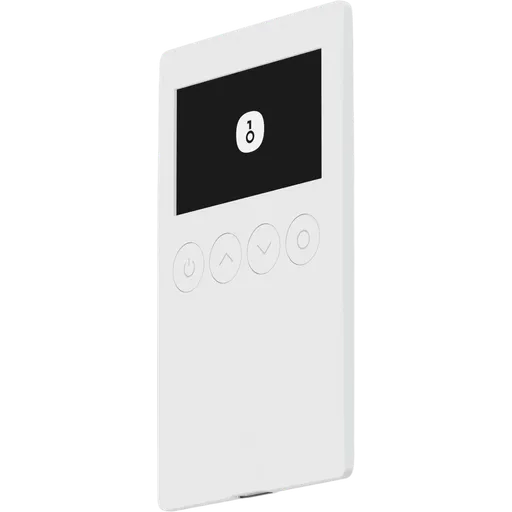
The Cryptnox Hardware Wallet is a pair of credit-card-size NFC smart cards built on an NXP JCOP 4 secure element, sold for $49.90. The second card holds the same seed as a backup, without seed words. The card has no screen, so transactions are checked only in the phone or desktop app. It suits Bitcoin, EVM, Tron and XRP users who accept that trade-off.
Security Warning
Avoid buying from unofficial marketplaces — counterfeit risk.
Security auditsVendor-reported: Cure53 audit of the JavaCard wallet applet (Nov 2019) found no critical or high findings and concluded the firmware 'mitigates attack classes common to card-based HSMs successfully — side-channels, signature malleability, and nonce reuse.' Report not public.
Last audit2019-11-01
PIN storageSHA-256 used in PIN/PUK verification (per technical reference)
Connectivity4 items
USB ConnectionNo
BluetoothNo
NFCYes
QR CodeNo
Physical Characteristics4 items
Dimensions85.6 × 54 × 0.76 mm
DisplayNone (Screenless Smart Card; Transactions Reviewed On The Phone/Desktop App)
Body MaterialPVC
BatteryNo
Software & Compatibility4 items
Desktop SupportYes
Mobile SupportYes
Supported OSWindows, macOS, Linux, iOS, Android
Supported Networks13+ networks
Recovery & Backup5 items
Seed Phrase StandardOn-card TRNG seed (dual-card generation, non-exportable, no mnemonic) or imported BIP39 mnemonic
Each card is a PVC smart card with a single chip: an NXP JCOP 4 secure element on the P71D321 platform, which holds Common Criteria EAL6+ certification. That certificate covers the chip platform; Cryptnox states that its own wallet applet is not certified. Keys are generated inside the secure element, and the documentation says no command exists to export the seed or private keys. Each card carries a factory-signed certificate that the Cryptnox app checks, and card and app communicate over an encrypted, authenticated channel.
The central trade-off is the missing screen. The card signs a hash supplied by the phone or desktop app and cannot show what that hash represents; in Cryptnox's words, "your phone is the display". If the phone or app is compromised, the card has no independent way to show the real recipient or amount. Devices with their own screen, such as the Keycard Shell ($129), which uses the same NXP JCOP 4 P71 chip family, show transaction details on the device before signing.
PIN of 4–9 digits plus a 12-character PUK. The card does not wipe itself after failed attempts; a blocked PIN is reset with the PUK.
Official sources give different PIN attempt limits, so no figure is stated here.
Cryptnox reports a Cure53 audit of the applet (November 2019) with no critical or high findings; the report is not public.
SecurityKey Factor
The Dual Card Set ships with two uninitialized cards. In the default setup they run a pairing procedure in which both secure elements derive the same seed. No recovery words are created, the seed cannot be exported, and the second card serves as the backup. Only the two cards of one set can run this procedure; cards from different sets cannot be mixed.
This removes the risk of a written seed phrase being found or photographed, but it ties recovery to Cryptnox hardware: if both cards are lost or damaged, the funds cannot be restored. Keeping the backup card in a separate location therefore matters more than usual. The included Access Card has the factory PIN and PUK printed on it and should not be stored with the cards.
Two alternatives exist:
Import an existing 12- or 24-word BIP39 recovery phrase, which keeps a standard backup that other wallets can also restore.
Initialize a single card from its own random number generator, with no backup at all.
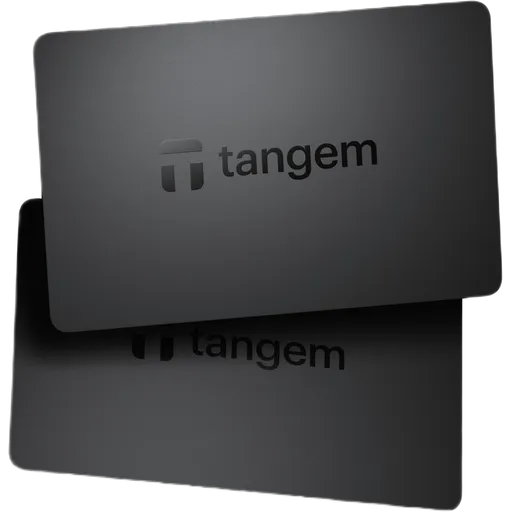
Version 2.9.6 of the iOS app added BIP39 passphrase support. Shamir backups and multisig are not part of the consumer set. Buyers who want a card-based setup at a similar price can also compare Tangem Wallet (2 Cards, $54.90) and Tangem Wallet (3 Cards, $69.90).
Recovery & backups
There is no battery to charge and nothing to plug in. On a phone, the card is held against the NFC antenna for each operation in the Cryptnox Wallet app for iOS (15.6 or later) and Android. On Windows, macOS and Linux, a desktop app and the open-source CLI work through an external USB smart-card reader that uses the card's contact interface; Android can also use a reader over USB OTG. The cards are standard ID-1 size (85.6 × 54 × 0.76 mm) and fit a wallet slot.
The PIN is entered in the app, not on the card. After pairing, the mobile app can use the phone's biometrics and secure element instead of the PIN. Cryptnox also documents an optional PIN-free signing path; signatures on that path do not need the PIN, which weakens protection if a card is lost, so it is a setting to enable only deliberately.
The app is listed in English only.
For Bitcoin, the app uses one fixed receive address rather than rotating addresses.
No card software update process is documented; new features arrive through the app.
Compared with the Keycard Shell ($129), which has its own keypad and 2-inch screen, the Cryptnox set is easier to carry but moves all input and review to the phone.
Usability / UX
The Cryptnox Wallet app has these networks preset: Bitcoin (legacy and native SegWit addresses), Ethereum, BNB Smart Chain, Polygon, Avalanche, Fantom, Arbitrum, Optimism, Gnosis, zkSync Era, Base, Tron and XRP. Further EVM networks can be added manually. The technical specification page frames this more narrowly, listing Bitcoin, Ethereum, BNB Chain, Tron and XRP as native and other EVM chains as added through WalletConnect or manual configuration.
The card supports only the secp256k1 and P-256 curves, so Solana and other ed25519 chains are not supported.
MetaMask: the phone app acts as a QR-based signer for the MetaMask browser extension.
WalletConnect: dApps are connected by scanning their QR code in the app; contract details are shown by the app and the dApp, not on the card.
Developer tools: an open-source CLI and Python, C++, Arduino and ESP32 SDKs under LGPL-3.0.
In-app services: buying and swaps through integrated third-party providers.
Each card also carries a FIDO Alliance-certified FIDO2/U2F applet, so it can work as a security key for online accounts. Multisig and output-descriptor export are not documented; the CLI can export an xpub.
Ecosystem & integrations
The card has no radio other than passive NFC and is powered only while it is being read, so it cannot transmit anything on its own. The privacy questions concern the app.
Cryptnox's software terms state that the app may send anonymized usage data and bug or crash reports, naming Firebase as a possible service. The iOS privacy label lists diagnostics not linked to the user; the Google Play listing names device or other IDs, collected for fraud prevention, security and compliance.
Whether this collection is on by default, and whether it can be switched off, is not documented.
For Bitcoin, the app uses one fixed receive address, which makes incoming payments easier to link.
Tor support and coin control are not documented.
In-app buying, swaps and WalletConnect Pay are operated by third parties with their own data handling; WalletConnect Pay may require identity verification.
No account sign-up is documented for the wallet app, though Cryptnox does not explicitly state that none is needed. The open-source CLI with a card reader avoids the mobile app but covers only Bitcoin and Ethereum. For contrast, the Keycard Shell ($129) signs over QR codes without a network connection, and its specifications list no telemetry.
Privacy
The Dual Card Set costs $49.90 including tax in Cryptnox's shop, which lists the price in euros at the same figure. The box contains two wallet cards, an Access Card with a printed PIN and PUK, and an NFC-blocking case. Cryptnox gives a 20-year warranty on the wallet cards.
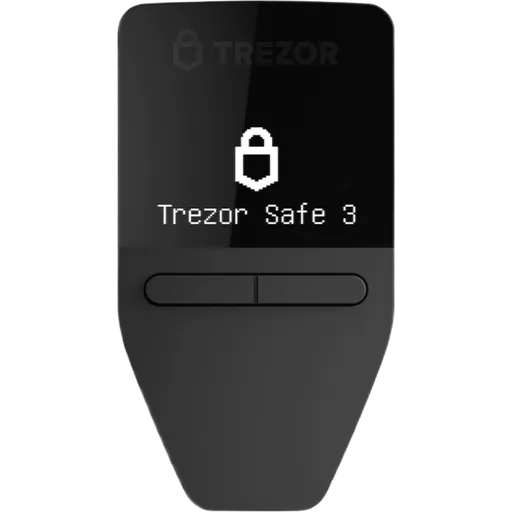
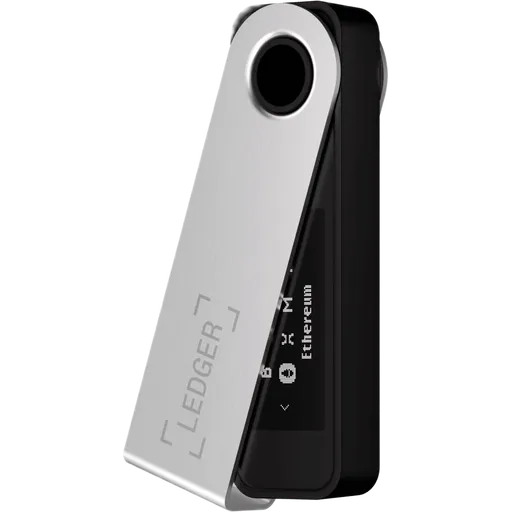
That puts it among the lowest-priced hardware wallets. The closest card-based peers are Tangem Wallet (2 Cards) at $54.90 and Tangem Wallet (3 Cards) at $69.90. Among devices with a built-in screen, the Trezor Safe 3 ($59) and Ledger Nano S Plus ($69) cost slightly more, and the Keycard Shell ($129) combines the same NXP JCOP 4 P71 chip family with a screen, keypad and camera.
What the price buys:
A certified secure-element platform and a hardware backup card in the box.
No battery to wear out, and a card format that fits in a wallet.
A FIDO2 security key on each card at no extra cost.
What it does not include: an independent screen for checking transactions, published applet source code or a published audit report. Buyers who mainly want low cost and convenience get a coherent package; those who want to verify every transaction on the device itself should budget for a wallet with a screen.
Price & value
The Cryptnox Hardware Wallet places a certified NXP secure element in two credit-card-size NFC cards for $49.90. Its strengths are practical: no battery, a backup card that holds the same non-exportable seed without recovery words, optional BIP39 import, and support for Bitcoin, Tron, XRP and a list of EVM networks, with MetaMask and WalletConnect access. The limits are just as specific. The card has no screen and signs what the app sends, so transaction review depends entirely on the phone or computer. The card applet and mobile app are closed source, the Cure53 audit is a vendor claim without a public report, the app collects anonymized diagnostics, and Solana is not supported. With the default backup, recovery depends on keeping at least one of the two cards intact.
Buy this wallet if:
you want a low-cost card wallet for Bitcoin, EVM networks, Tron or XRP and are comfortable reviewing transactions on your phone.
you prefer a second card to a written seed phrase as your backup.
you want a wallet that fits in a card slot and also works as a FIDO2 security key.
you need Solana or another ed25519 chain; check the coin lists of the Ledger Nano S Plus ($69) or Tangem Wallet (2 Cards, $54.90).
you want open-source signing firmware; the Keycard Shell ($129) publishes its firmware source with reproducible builds.
✓Our Verdict
The Cryptnox Hardware Wallet places a certified NXP secure element in two credit-card-size NFC cards for $49.90. Its strengths are practical: no battery, a backup card that holds the same non-exportable seed without recovery words, optional BIP39 import, and support for Bitcoin, Tron, XRP and a list of EVM networks, with MetaMask and WalletConnect access. The limits are just as specific. The card has no screen and signs what the app sends, so transaction review depends entirely on the phone or computer. The card applet and mobile app are closed source, the Cure53 audit is a vendor claim without a public report, the app collects anonymized diagnostics, and Solana is not supported. With the default backup, recovery depends on keeping at least one of the two cards intact.
Buy this wallet if:
you want a low-cost card wallet for Bitcoin, EVM networks, Tron or XRP and are comfortable reviewing transactions on your phone.
you prefer a second card to a written seed phrase as your backup.
you want a wallet that fits in a card slot and also works as a FIDO2 security key.
Skip this wallet if:
you want to confirm recipient and amount on the wallet itself; the Trezor Safe 3 ($59), Ledger Nano S Plus ($69) and Keycard Shell ($129) have their own screens.
you need Solana or another ed25519 chain; check the coin lists of the Ledger Nano S Plus ($69) or Tangem Wallet (2 Cards, $54.90).
you want open-source signing firmware; the Keycard Shell ($129) publishes its firmware source with reproducible builds.
Ready to buy Cryptnox Hardware Wallet?
We may earn a commission if you purchase through our links. This doesn't affect our editorial independence.
Impermanent loss happens when asset prices in a liquidity pool diverge from external markets, reducing the value of liquidity providers' holdings compared to simply holding the assets.
EAL Certification (Evaluation Assurance Level) from Common Criteria rates the security of hardware components, like secure chips in crypto hardware wallets. Higher levels, such as EAL5+ or EAL6+, indicate stronger resistance to attacks.
Recovery is the process of restoring access to a cryptocurrency wallet using its seed phrase or mnemonic backup if the original wallet is lost or inaccessible.
A backup in cryptocurrency is a secure copy of a wallet's seed phrase or private keys. It enables recovery of funds if the original wallet is lost or damaged.
A Recovery Card is a physical card or sheet for backing up a cryptocurrency wallet's seed phrase, enabling recovery if the original wallet is lost or damaged.
BIP39 is a standard for generating mnemonic seed phrases that are used to create deterministic wallets and securely back up cryptocurrency private keys.
A Random Number Generator (RNG) produces unpredictable numbers essential for cryptographic security in blockchain, such as generating private keys and nonces.
A passphrase is an additional security layer for cryptocurrency wallets, acting as a 25th word in the BIP39 seed phrase, protecting access to hidden wallets.
Multisig (multi-signature) is a security feature that requires multiple private keys to authorize a transaction, enhancing protection against unauthorized access in blockchain networks.
Tangem is a hardware wallet in the form of a physical card that stores cryptocurrency private keys securely and offline, allowing for easy and portable access to digital assets.
A companion app is a software application used to manage and interact with cryptocurrency wallets or blockchain networks, typically offering features like transactions and security controls.
Bitcoin (BTC) is the first decentralized cryptocurrency, launched in 2009. It uses blockchain technology for secure, peer-to-peer digital transactions without intermediaries.
SegWit (Segregated Witness) is a Bitcoin upgrade that moves transaction signatures to a separate data structure, increasing block capacity and enabling efficient scaling solutions like the Lightning Network.
Ethereum is a decentralized blockchain platform that enables smart contracts and decentralized applications (dApps). Its native cryptocurrency is Ether (ETH).
Polygon is a layer-2 scaling solution for Ethereum that enables faster, cheaper transactions via its Proof-of-Stake sidechain. Native token: MATIC (also called Polygon PoS).
Avalanche (AVAX) is a scalable layer-1 blockchain platform that achieves high throughput and sub-second transaction finality using its novel proof-of-stake consensus.
Optimism is an Ethereum Layer 2 optimistic rollup network. It batches transactions off-chain for faster, cheaper processing while inheriting Ethereum's security.
TRON is a blockchain platform and cryptocurrency (TRX) designed for high-throughput decentralized applications, especially in content sharing and entertainment.
BNB Chain is a high-performance blockchain network developed by Binance, formerly Binance Smart Chain (BSC). It supports smart contracts, DeFi, and uses BNB as its native token.
WalletConnect is a protocol that enables secure communication between decentralized applications (dApps) and mobile wallets through QR code scanning or deep linking.
An elliptic curve is a mathematical curve used in elliptic curve cryptography (ECC) for generating secure public-private key pairs in blockchains, like secp256k1 in Bitcoin.
Solana is a high-performance layer-1 blockchain platform that enables fast, low-cost transactions using Proof of History and Proof of Stake. Its native token is SOL.
XPUB is an extended public key (xpub) in hierarchical deterministic (HD) wallets. It derives child public keys and addresses from a master public key without exposing private keys.
Coin Control is a feature that allows users to manually select which unspent transaction outputs (UTXOs) to use in a transaction, giving more control over privacy and fees.
KYC (Know Your Customer) is the regulatory process where cryptocurrency exchanges verify users' identities using documents like ID or proof of address to prevent fraud and money laundering.
Telemetry in cryptocurrency and blockchain refers to the automatic collection and transmission of anonymous usage data, metrics, and error reports from wallets or nodes to improve software.
UTXO (Unspent Transaction Output) is a unit of cryptocurrency from a previous transaction that remains unspent and serves as input for new transactions in blockchains like Bitcoin.
Reproducible Builds refer to the process where the same source code consistently produces identical binary outputs, ensuring verifiable and trustworthy software in blockchain and crypto projects.
Cryptnox Hardware Wallet uses a certified Secure Element chip to store private keys in tamper-resistant hardware. Even if the device's software were compromised, the Secure Element isolates your keys from extraction. The device has been independently security audited.
What if Cryptnox goes out of business?
Your seed phrase follows the BIP39 standard, meaning you can recover your funds using any compatible wallet — you are not locked into Cryptnox's ecosystem.
What if I lose my Cryptnox Hardware Wallet?
Your cryptocurrency is stored on the blockchain, not on the device. If you lose your Cryptnox Hardware Wallet, you can recover full access using your seed phrase on any compatible wallet. Multiple backup cards are supported for redundant recovery.
How long will Cryptnox Hardware Wallet receive security updates?
Check Cryptnox's website for the latest firmware update schedule.
Is a hardware wallet without a screen safe?
The keys stay inside an EAL6+-certified NXP secure element and cannot be exported, which protects them from theft by malware. What the card cannot do is show what it signs: recipient and amount are reviewed only in the phone or desktop app. A compromised phone could therefore present one transaction and send another for signing. Wallets with their own screen, such as the Keycard Shell ($129), close that gap.
How does the backup work without seed words?
By default, the two cards in the set generate the same seed between themselves, and the second card is the backup. No recovery words exist and the seed cannot be exported, so losing both cards means losing access. Alternatively, an existing 12- or 24-word BIP39 phrase can be imported, which gives a standard backup. A single card can also be set up without any backup.
Is Cryptnox open source?
Partly. The command-line tool and the Python, C++, Arduino and ESP32 SDKs are published on GitHub under LGPL-3.0. The wallet applet that runs on the card is closed source; only its documentation is public. The Cryptnox Wallet mobile app is proprietary. Cryptnox says Cure53 audited the applet in November 2019 without critical or high findings, but the report has not been published.
Does the Cryptnox wallet use Bluetooth or USB?
No. The card has no battery, no Bluetooth and no USB port. It connects to a phone over NFC, or to a computer through an external smart-card reader using the card's contact chip. It is not air-gapped in the QR-code sense: signing happens over NFC or a reader with a phone or computer running the Cryptnox software.
Which coins does the Cryptnox Hardware Wallet support?
The app has Bitcoin, Ethereum, BNB Smart Chain, Polygon, Avalanche, Fantom, Arbitrum, Optimism, Gnosis, zkSync Era, Base, Tron and XRP preset, and custom EVM networks can be added. Tokens on those networks are handled by the app. Solana and other chains that use the ed25519 curve are not supported.
How does Cryptnox compare with Tangem Wallet?
Both are NFC smart-card wallets sold in sets. The Cryptnox Dual Card Set costs $49.90 for two cards; Tangem Wallet (2 Cards) is listed at $54.90 and the 3-card set at $69.90. Cryptnox's distinguishing points are a contact interface for card readers, optional BIP39 import and a FIDO2 key on each card. The coin lists and app features differ, so compare them for the assets you hold.
Some links on this page are affiliate links. If you purchase through them, I may earn a commission at no additional cost to you. This helps support the site and allows me to continue creating detailed, independent reviews.
Our rating methodology is evolving. Ratings and assessments will be refined as we improve our scoring framework to reflect the most accurate results.
Ready to Secure Your Crypto?
Find the right hardware wallet based on your needs, budget, and security priorities.