UKey Core 26 ($258): touchscreen wallet with four security chips, published firmware source, Bluetooth, NFC and a QR air-gap mode, from a brand new to the market.
By the WalletInsights editorial team
We may earn a commission from purchases through affiliate links. This does not affect our ratings. Affiliate Disclosure
UKey Core 26 is a $258 touchscreen hardware wallet from Hong Kong-based UKey, with four security chips, published firmware source, USB-C, Bluetooth, NFC and a QR air-gap mode. Its main limitations are a closed-source companion app, no independent audit or reproducible builds yet, and a brand with only months of public history. It fits early adopters who want a large-screen multi-chain device.
Security Warning
Avoid buying from unofficial marketplaces — counterfeit risk.
UKey describes the Core 26 as a four-chip design: two ACL16 secure chips plus two in-house chips, UKS-101 and UKS-102, arranged in what the company calls a 'mutual distrust' architecture. The product page lists a secure chip level of EAL6+, but UKey has not published a Common Criteria certificate, the evaluation lab or which chip the rating applies to, and it does not name the maker of the ACL16. We therefore treat EAL6+ as a vendor claim.
The firmware source (v1.5.0, September 2026) is public on GitHub. The bootloader checks the vendor signature at power-on, and firmware images are signed by four of seven keys, all held by UKey. Reproducible builds are not available, so users cannot confirm that the shipped binary matches the published code. UKey's 10 September 2026 announcement describes an independent audit and reproducible builds as planned; no audit report has been published.
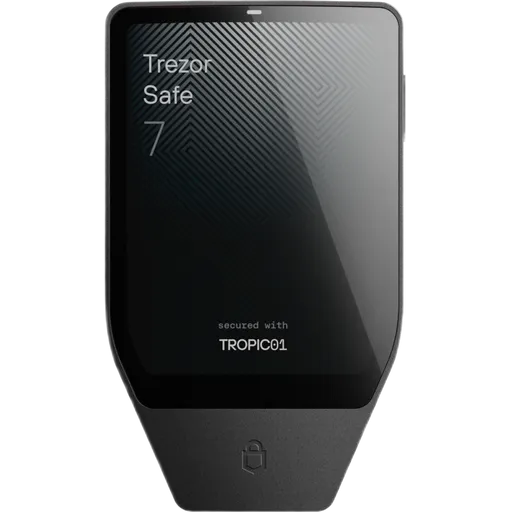
Supply-chain measures include anti-counterfeit labels, an online attestation that checks the serial number, a tamper warning and a first-use indicator that survives a factory reset. Before signing, the screen shows address, amount and network, except in the optional Turbo mode for EVM and Solana, which shows only the network name. At a similar price, Trezor Safe 7 ($249) comes from a vendor with a much longer public record.
SecurityKey Factor
The Core 26 creates and restores standard BIP39recovery phrases of 12, 18 or 24 words, so a backup is not tied to UKey hardware and can be restored on other BIP39-compatible wallets. UKey's migration guides use standard derivation paths for Bitcoin (Legacy, Nested SegWit and Native SegWit), Ethereum and Solana.
Passphrase support adds hidden wallets. The Attach to PIN feature binds a separate PIN to a passphrase wallet, so entering that PIN at unlock opens the hidden wallet directly. This is convenient, but the passphrase still needs its own backup: without it, the hidden wallet cannot be restored from the recovery phrase alone.
The box includes an NFC Backup Card (UKey Seed Card). UKey also sells a Seed Ring and a titanium Seed Ti plate, and a paper mnemonic card is supported. UKey states that it cannot retrieve or reset a forgotten PIN: after repeated wrong entries the device wipes itself, and access is restored from the recovery phrase. UKey's documents give different numbers for that limit, so we do not state one.
No Shamir (SLIP-39) or other multi-share backup is documented for the Core 26. The recovery phrase, plus any passphrase, therefore remains a single point of failure, and storing it safely matters more than the choice of backup medium.
Recovery & backups
The device is built around a 3.5-inch, 480 × 800 color touchscreen in a 115 × 54.5 × 6.5 mm stainless-steel frame. It weighs 118 g and has a 620 mAh battery. The screen is large for a hardware wallet, which leaves room to display full addresses and transaction details on the device. A fingerprint sensor in the power button offers an optional alternative to the PIN for unlocking; the PIN is still required for security settings.
The companion UKey Wallet app runs on iOS, Android, Windows, macOS and Linux, plus a Chrome extension. According to UKey, the desktop app connects over USB, Bluetooth or QR, the mobile app over Bluetooth or QR, and the extension over USB or QR. The firmware source contains interface translations for 11 languages, including German and Spanish.
The QR Air-Gap mode uses the built-in camera and disables Bluetooth, USB and NFC, but supports only Bitcoin and EVM chains. Optional Turbo mode shortens EVM and Solana signing by skipping the on-screen transaction details, which saves steps at the cost of verification. The box contains the device, a USB-C cable, a tempered-glass screen protector and the NFC Backup Card; finishes are Space Black and 24K Gold. In the same price range, Ledger Flex ($249) and Trezor Safe 7 ($249) come from longer-established vendors.
Usability / UX
UKey says the Core 26 supports assets on more than 50 blockchain networks; a separate UKey FAQ cites 60+ chains and 30,000+ tokens for its hardware in general. Documented support includes Bitcoin, Ethereum and EVM networks such as Arbitrum One, Optimism, Base and Linea (UKey cites 20 Ethereum networks in total), plus Solana, TRON, TON, Aptos, NEAR, Avalanche, Kava, Kaia and Celo. Monero is supported on the Core 26 for sending and receiving through the Monero GUI.
Most activity runs through the UKey Wallet app, which adds WalletConnect, a DApp browser, a cross-chainswap aggregator and card purchases through the partner Coinify. UKey also names OKX Web3 Wallet and Rabby as compatible third-party wallets, but publishes no full compatibility list. A developer portal documents a WebUSB transport for integrations.
The firmware repository contains code for further chains, but code in the repository does not confirm that a chain is enabled for users. Bitcoin power-user features are also undocumented: multisig, coin control and xpub export are not described as available on the Core 26. Buyers who hold only Bitcoin may prefer Coinkite Coldcard Q ($319), a Bitcoin-only device that costs more, while those who want the broadest documented chain list will find the Core 26 covers the major networks.
Ecosystem & integrations
According to UKey, the UKey Wallet app requires no account registration, phone number or email. Beyond that, privacy is largely undocumented. UKey publishes no statement on telemetry for the device or the app, and no Tor support is documented. The app advertises real-time risk interception 'powered by cloud AI', which means some data is processed by an online service; UKey does not document what is sent. Because the app is closed source, outside reviewers cannot inspect its network traffic in code.
Device attestation also contacts UKey's server to check the serial number, and the built-in buy and swap features rely on third-party providers. Bluetooth is described as an encrypted link, but Bluetooth and NFC still add radio interfaces. The QR Air-Gap mode switches them off, though only for Bitcoin and EVM chains.
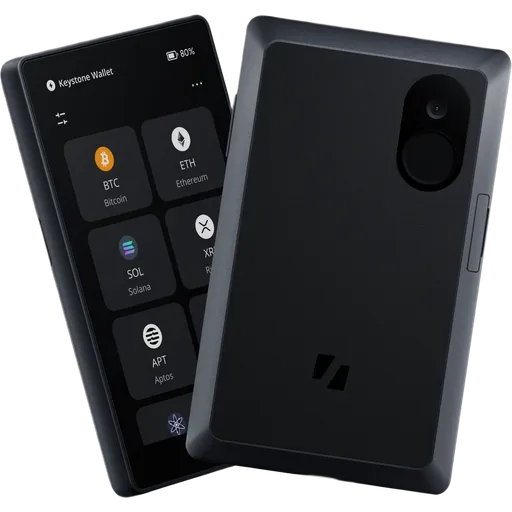
No CoinJoin, connection to one's own node or other Bitcoin privacy features are documented. Users who put privacy first should note that the published firmware covers only part of the stack: balances and history are shown through the closed app. For a QR-based workflow without Bluetooth or NFC hardware, Keystone 3 Pro ($149) is an alternative at a lower price.
Privacy
UKey lists the Core 26 at $258. The store also shows a crossed-out 'compare-at' price of $499; we evaluate the device at $258 and do not treat that figure as a real discount. At the time of writing (26 October 2026), the product page reads 'Sold out, restocking', so availability may be limited.
For the money, the hardware list is long: four chips, a 3.5-inch touchscreen, a stainless-steel frame, fingerprint unlock, a camera for QR signing, Bluetooth, NFC and an NFC backup card in the box. What the price does not yet include is external validation. UKey announced the Core 26 on 28 May 2026 and the device went on sale on 28 September 2026. We found no independent hands-on reviews or teardowns, and most coverage so far is paid placement.
Similar budgets buy devices from vendors with longer public records: Trezor Safe 7 ($249), Ledger Flex ($249) and OneKey Pro ($278), which according to our data also combines Bluetooth, NFC and QR. Buyers who mainly want QR-based signing can spend less on Keystone 3 Pro ($149). The Core 26's case rests on its hardware specification; how well it holds up will only become clear after independent audits and longer use in the field.
Price & value
The UKey Core 26 offers a large touchscreen, a four-chip design, published firmware source, multisig-signed updates and a choice of USB-C, Bluetooth, NFC and QR connections for $258. UKey's documentation on setup, recovery and supply-chain checks is detailed. The open points matter for a device that holds keys: the EAL6+ rating has no published certificate, the ACL16 chip maker is undisclosed, there is no independent audit or reproducible build yet, the companion app is closed source, and the brand has only a few months of public history with no independent hands-on reviews found. Optional Turbo mode also trades on-screen transaction details for speed on EVM and Solana. None of this points to a known flaw, but most of the Core 26's security properties currently rest on UKey's own statements.
Buy this wallet if:
You want a large touchscreen wallet with Bluetooth, NFC and a QR air-gap option, and you accept being an early adopter of a new brand.
You hold Monero alongside Bitcoin and EVM assets and want them on one device.
You use passphrase wallets and want to open each one with its own PIN.
Skip this wallet if:
You want a vendor with a long public track record at a similar price: consider Trezor Safe 7 ($249) or Ledger Flex ($249).
You prefer a wallet without Bluetooth or NFC hardware: Keystone 3 Pro ($149) relies on QR codes.
You hold only Bitcoin: Coinkite Coldcard Q ($319) is a Bitcoin-only device for more.
✓Our Verdict
The UKey Core 26 offers a large touchscreen, a four-chip design, published firmware source, multisig-signed updates and a choice of USB-C, Bluetooth, NFC and QR connections for $258. UKey's documentation on setup, recovery and supply-chain checks is detailed. The open points matter for a device that holds keys: the EAL6+ rating has no published certificate, the ACL16 chip maker is undisclosed, there is no independent audit or reproducible build yet, the companion app is closed source, and the brand has only a few months of public history with no independent hands-on reviews found. Optional Turbo mode also trades on-screen transaction details for speed on EVM and Solana. None of this points to a known flaw, but most of the Core 26's security properties currently rest on UKey's own statements.
Buy this wallet if:
You want a large touchscreen wallet with Bluetooth, NFC and a QR air-gap option, and you accept being an early adopter of a new brand.
You hold Monero alongside Bitcoin and EVM assets and want them on one device.
You use passphrase wallets and want to open each one with its own PIN.
Skip this wallet if:
You want a vendor with a long public track record at a similar price: consider Trezor Safe 7 ($249) or Ledger Flex ($249).
You prefer a wallet without Bluetooth or NFC hardware: Keystone 3 Pro ($149) relies on QR codes.
You hold only Bitcoin: Coinkite Coldcard Q ($319) is a Bitcoin-only device for more.
Ready to buy UKey Core 26?
We may earn a commission if you purchase through our links. This doesn't affect our editorial independence.
Impermanent loss happens when asset prices in a liquidity pool diverge from external markets, reducing the value of liquidity providers' holdings compared to simply holding the assets.
EAL Certification (Evaluation Assurance Level) from Common Criteria rates the security of hardware components, like secure chips in crypto hardware wallets. Higher levels, such as EAL5+ or EAL6+, indicate stronger resistance to attacks.
A bootloader is a small program that initializes hardware and loads the main operating system or firmware on a device, often used in blockchain hardware wallets for secure startup.
Reproducible Builds refer to the process where the same source code consistently produces identical binary outputs, ensuring verifiable and trustworthy software in blockchain and crypto projects.
Solana is a high-performance layer-1 blockchain platform that enables fast, low-cost transactions using Proof of History and Proof of Stake. Its native token is SOL.
BIP39 is a standard for generating mnemonic seed phrases that are used to create deterministic wallets and securely back up cryptocurrency private keys.
Recovery is the process of restoring access to a cryptocurrency wallet using its seed phrase or mnemonic backup if the original wallet is lost or inaccessible.
A backup in cryptocurrency is a secure copy of a wallet's seed phrase or private keys. It enables recovery of funds if the original wallet is lost or damaged.
Bitcoin (BTC) is the first decentralized cryptocurrency, launched in 2009. It uses blockchain technology for secure, peer-to-peer digital transactions without intermediaries.
SegWit (Segregated Witness) is a Bitcoin upgrade that moves transaction signatures to a separate data structure, increasing block capacity and enabling efficient scaling solutions like the Lightning Network.
Ethereum is a decentralized blockchain platform that enables smart contracts and decentralized applications (dApps). Its native cryptocurrency is Ether (ETH).
A passphrase is an additional security layer for cryptocurrency wallets, acting as a 25th word in the BIP39 seed phrase, protecting access to hidden wallets.
A hidden wallet conceals a secondary cryptocurrency wallet behind an additional passphrase on the same seed, providing plausible deniability against coercion.
A Recovery Card is a physical card or sheet for backing up a cryptocurrency wallet's seed phrase, enabling recovery if the original wallet is lost or damaged.
Shamir Secret Sharing (SSS) divides a secret, like a crypto wallet seed, into multiple shares. A threshold number of shares reconstructs it, enhancing security as in SLIP-39 backups.
A companion app is a software application used to manage and interact with cryptocurrency wallets or blockchain networks, typically offering features like transactions and security controls.
Optimism is an Ethereum Layer 2 optimistic rollup network. It batches transactions off-chain for faster, cheaper processing while inheriting Ethereum's security.
TRON is a blockchain platform and cryptocurrency (TRX) designed for high-throughput decentralized applications, especially in content sharing and entertainment.
Avalanche (AVAX) is a scalable layer-1 blockchain platform that achieves high throughput and sub-second transaction finality using its novel proof-of-stake consensus.
Monero (XMR) is a privacy-focused cryptocurrency that uses ring signatures, stealth addresses, and RingCT to obscure sender, receiver, and transaction amounts on the blockchain.
WalletConnect is a protocol that enables secure communication between decentralized applications (dApps) and mobile wallets through QR code scanning or deep linking.
Interoperability in blockchain refers to the ability of different blockchain networks to communicate and exchange data or value seamlessly, enabling cross-chain functionality.
In cryptocurrency, a swap is the direct exchange of one token for another on a blockchain, often via decentralized exchanges (DEXs) without intermediaries.
A Web3 wallet is a digital wallet that allows users to interact with decentralized applications (dApps) and manage blockchain-based assets like cryptocurrencies and NFTs.
WebUSB is a browser API that lets web apps communicate directly with USB-connected hardware wallets for secure crypto transactions without plugins or native apps.
Multisig (multi-signature) is a security feature that requires multiple private keys to authorize a transaction, enhancing protection against unauthorized access in blockchain networks.
Coin Control is a feature that allows users to manually select which unspent transaction outputs (UTXOs) to use in a transaction, giving more control over privacy and fees.
XPUB is an extended public key (xpub) in hierarchical deterministic (HD) wallets. It derives child public keys and addresses from a master public key without exposing private keys.
HODL is cryptocurrency slang for holding assets long-term despite price volatility, rather than selling. It originated from a 2013 forum post misspelling 'hold' as 'I AM HODLING.'
Telemetry in cryptocurrency and blockchain refers to the automatic collection and transmission of anonymous usage data, metrics, and error reports from wallets or nodes to improve software.
CoinJoin is a privacy technique in cryptocurrency where multiple users combine their transactions, making it harder to trace individual senders and receivers.
UKey Core 26 uses a certified Secure Element chip to store private keys in tamper-resistant hardware. Even if the device's software were compromised, the Secure Element isolates your keys from extraction. The firmware is open-source, meaning security researchers worldwide can audit the code for vulnerabilities.
What if UKey goes out of business?
UKey's firmware is open-source — even if the company disappears, the community can maintain the software. Your seed phrase works with any BIP39-compatible wallet, so your funds are always recoverable.
What if I lose my UKey Core 26?
Your cryptocurrency is stored on the blockchain, not on the device. If you lose your UKey Core 26, you can recover full access using your seed phrase on any compatible wallet.
How long will UKey Core 26 receive security updates?
Check UKey's website for the latest firmware update schedule.
Is the UKey Core 26 safe to use?
The Core 26 uses four chips, signed firmware checked at power-on, a PIN with automatic wipe and tamper detection. However, its EAL6+ rating has no published certificate, no independent audit or teardown exists yet, and the brand has been public only since May 2026. Its design follows established practices, but most security claims are currently UKey's own and have not been confirmed by outside researchers.
Is the UKey Core 26 open source?
Partly. UKey published the Core 26 firmware source on GitHub in September 2026 (v1.5.0, under GPLv3, LGPLv3 and MIT licences). The UKey Wallet companion app is closed source. Reproducible builds are not available yet, so users cannot confirm that the firmware on the device was built from the published code. UKey says reproducible builds are planned.
Does the UKey Core 26 have Bluetooth, and can it work air-gapped?
It has USB-C, Bluetooth, NFC and a QR camera. In Air-Gap mode, the device signs via QR codes and disables Bluetooth, USB and NFC. That mode currently supports only Bitcoin and EVM chains; other networks such as Solana or TRON need a USB or Bluetooth connection to the UKey Wallet app.
How do I back up the UKey Core 26?
The device generates a standard BIP39 recovery phrase of 12, 18 or 24 words. It can be written on paper or stored on the NFC Backup Card included in the box; UKey also sells a Seed Ring and a titanium Seed Ti plate. Passphrase wallets need a separate backup of the passphrase. No Shamir backup is documented.
Which coins does the UKey Core 26 support?
UKey states support for more than 50 networks, including Bitcoin, Ethereum and EVM networks such as Arbitrum One, Optimism, Base and Linea, Solana, TRON, TON, Aptos, NEAR and Avalanche. Monero is supported on the Core 26 through the Monero GUI. UKey does not publish a complete list of supported chains, so check a specific token in UKey's documentation before buying.
UKey Core 26 or Trezor Safe 7: which should I choose?
Trezor Safe 7 ($249) costs slightly less and comes from a vendor with a long public history; according to our data it offers Bluetooth but no NFC or QR camera. The Core 26 ($258) adds NFC, a QR air-gap mode, a fingerprint sensor and documented Monero support, but its security claims have not yet been independently verified.
Some links on this page are affiliate links. If you purchase through them, I may earn a commission at no additional cost to you. This helps support the site and allows me to continue creating detailed, independent reviews.
Our rating methodology is evolving. Ratings and assessments will be refined as we improve our scoring framework to reflect the most accurate results.
Ready to Secure Your Crypto?
Find the right hardware wallet based on your needs, budget, and security priorities.