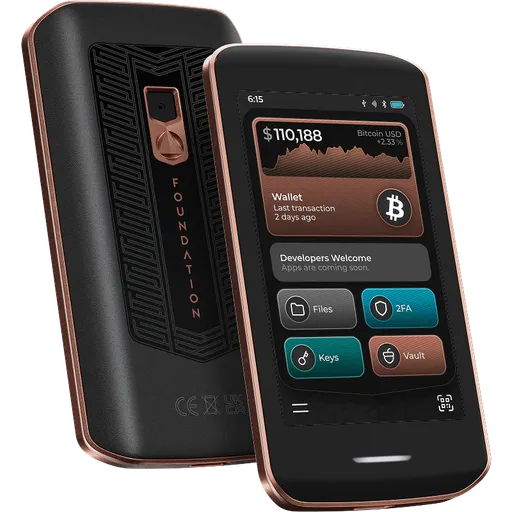
Foundation's 2025 flagship: an open-source, audited security platform (KeyOS) combining a Bitcoin wallet with FIDO keys, 2FA and encrypted storage on a color touchscreen.
By the WalletInsights editorial team
We may earn a commission from purchases through affiliate links. This does not affect our ratings. Affiliate Disclosure
The Foundation Passport Prime ($349, 2025) is less a wallet than a programmable security platform: its KeyOS Rust microkernel runs a Bitcoin wallet alongside FIDO security keys, TOTP/2FA and 50 GB of encrypted storage. It pairs an ATECC608C secure element with a Microchip SAMA5D2 processor, was independently audited by Keylabs with no critical or high findings, and backs up the seed as a 2-of-3 Shamir (SLIP-39) split across tamper-evident NFC Keycards. Hardware and software are open source (GPLv3), though reproducible builds are not yet available. It is best for Bitcoin-first power users who want an audited, multi-purpose device; altcoin holders and reproducibility purists should look elsewhere.
Security Warning
Avoid buying from unofficial marketplaces — counterfeit risk.
The Prime is built on KeyOS, a Rust microkernel that isolates each app, and pairs an ATECC608C secure element with a Microchip SAMA5D2 security processor. Keys are generated and held in the secure element and are non-extractable, and the device verifies its firmware via secure boot.
Its strongest credential is an independent audit by Keylabs (the team behind wallet.fail) that reported no critical or high-severity findings. Hardware and firmware are open source under GPLv3 — but reproducible builds are not yet available, so users cannot yet verify that shipped binaries match the published source. As a general-purpose app platform it also carries a larger attack surface than a single-purpose signer.
SecurityKey Factor
By default the Prime splits the seed using 2-of-3 Shamir Secret Sharing (SLIP-39) onto three tamper-evident NFC Keycards, so any two cards reconstruct the wallet and losing one card is not fatal. This removes the single-point-of-failure of a paper seed.
Standard BIP-39 import/export (12/24 words), a BIP-39 passphrase for hidden wallets, and BIP-85 deterministic child seeds are all supported. The trade-off is physical: you now manage a set of cards rather than one backup.
Recovery & backups
The Prime has a 3.5-inch Gorilla Glass color touchscreen with haptics — the largest in Foundation’s lineup — and a rechargeable battery in an anodized aluminium body. First-time setup takes roughly 18 minutes.
Beyond signing, it doubles as a FIDO2 security key, a TOTP/2FA authenticator and a 50 GB encrypted file vault, which is unusual for a hardware wallet and broadens who it is useful to.
Usability / UX
The first-party app is Bitcoin-only, with PSBT support, multisig up to 15 signers and output-descriptor export for coordinators such as Sparrow, Specter and Nunchuk. Altcoins are possible only through third-party KeyOS apps (e.g. Cake Wallet), not the native wallet.
It connects via QR (animated UR2.0), microSD, NFC and the post-quantum-encrypted QuantumLink Bluetooth, and pairs with the Envoy app on iOS and Android plus desktop coordinators. There is no built-in WalletConnect.
Ecosystem & integrations
No account registration is required, and the device can operate fully air-gapped over QR codes or microSD. Companion data in Envoy is encrypted, and Foundation does not require telemetry.
The privacy trade-off is connectivity: the Prime includes Bluetooth (QuantumLink) and NFC, so it presents more wireless interfaces than a strictly air-gapped, QR-only device — even though that Bluetooth link is post-quantum encrypted.
Privacy
At $349 the Prime sits at the premium end of the market. Its value is in consolidation, not coin coverage:
Foundation Passport ($199) — the same air-gapped Bitcoin lineage without the platform, touchscreen or Shamir cards.
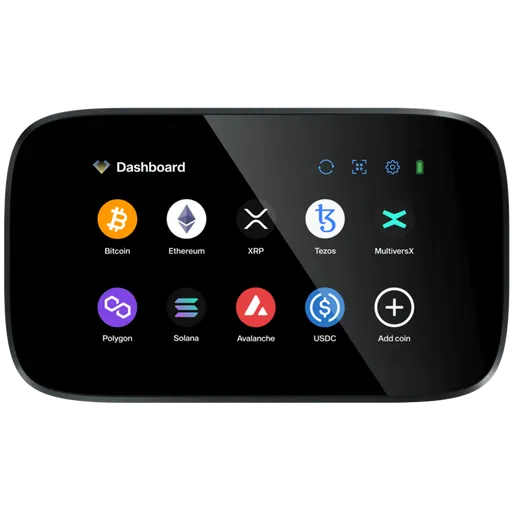
Ngrave Zero ($398) — fully air-gapped and multi-coin with an EAL7 OS, but closed-source.
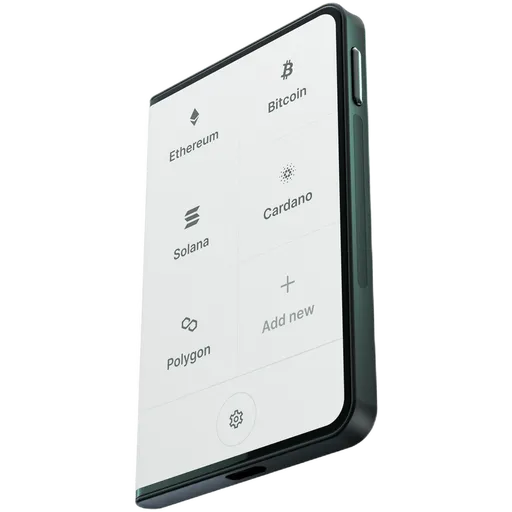
Trezor Safe 7 ($249) — cheaper, open-source with reproducible builds, but a single-purpose signer.
You are paying for an audited, open platform that replaces several security devices at once.
Price & value
The Passport Prime earns its $349 price through breadth rather than coin coverage: a credit-card-sized, audited, open-source security platform that consolidates a Bitcoin wallet, FIDO keys, 2FA and encrypted storage into one device with a polished color touchscreen.
Buy this wallet if:
You are Bitcoin-first and want a single audited device that also replaces your FIDO security key, authenticator app and an encrypted file vault.
You value a strong default backup — 2-of-3 Shamir across physical NFC Keycards — over writing a single seed phrase on paper.
You want open-source hardware and software with a published third-party audit (Keylabs).
Look elsewhere if:
You need broad altcoin support out of the box — the first-party app is Bitcoin-only and altcoins require third-party apps.
You require reproducible builds today, or want the smallest possible attack surface of a minimal air-gapped signer.
You want the cheapest reliable signer — a classic Passport or Trezor Safe costs less.
✓Our Verdict
The Passport Prime earns its $349 price through breadth rather than coin coverage: a credit-card-sized, audited, open-source security platform that consolidates a Bitcoin wallet, FIDO keys, 2FA and encrypted storage into one device with a polished color touchscreen.
Buy this wallet if:
You are Bitcoin-first and want a single audited device that also replaces your FIDO security key, authenticator app and an encrypted file vault.
You value a strong default backup — 2-of-3 Shamir across physical NFC Keycards — over writing a single seed phrase on paper.
You want open-source hardware and software with a published third-party audit (Keylabs).
Look elsewhere if:
You need broad altcoin support out of the box — the first-party app is Bitcoin-only and altcoins require third-party apps.
You require reproducible builds today, or want the smallest possible attack surface of a minimal air-gapped signer.
You want the cheapest reliable signer — a classic Passport or Trezor Safe costs less.
Ready to buy Foundation Passport Prime?
We may earn a commission if you purchase through our links. This doesn't affect our editorial independence.
Impermanent loss happens when asset prices in a liquidity pool diverge from external markets, reducing the value of liquidity providers' holdings compared to simply holding the assets.
Secure Boot is a security feature that ensures only trusted software runs on a device by verifying its integrity during startup, preventing unauthorized code execution in crypto systems.
Reproducible Builds refer to the process where the same source code consistently produces identical binary outputs, ensuring verifiable and trustworthy software in blockchain and crypto projects.
Shamir Secret Sharing (SSS) divides a secret, like a crypto wallet seed, into multiple shares. A threshold number of shares reconstructs it, enhancing security as in SLIP-39 backups.
BIP39 is a standard for generating mnemonic seed phrases that are used to create deterministic wallets and securely back up cryptocurrency private keys.
A passphrase is an additional security layer for cryptocurrency wallets, acting as a 25th word in the BIP39 seed phrase, protecting access to hidden wallets.
BIP85 is a Bitcoin Improvement Proposal for generating child seeds from a master seed, providing deterministic entropy for use in secure key derivation and backup processes.
A backup in cryptocurrency is a secure copy of a wallet's seed phrase or private keys. It enables recovery of funds if the original wallet is lost or damaged.
Two-Factor Authentication (2FA) secures cryptocurrency accounts and wallets by requiring two verification methods, such as a password plus a code from an authenticator app.
Bitcoin (BTC) is the first decentralized cryptocurrency, launched in 2009. It uses blockchain technology for secure, peer-to-peer digital transactions without intermediaries.
PSBT (Partially Signed Bitcoin Transaction) is a Bitcoin transaction format that allows multiple parties to sign a transaction incrementally before finalizing it.
Multisig (multi-signature) is a security feature that requires multiple private keys to authorize a transaction, enhancing protection against unauthorized access in blockchain networks.
Specter is a Bitcoin hardware wallet solution designed for advanced users, offering secure storage through a customizable, self-hosted setup with options like Specter Desktop and Specter DIY.
WalletConnect is a protocol that enables secure communication between decentralized applications (dApps) and mobile wallets through QR code scanning or deep linking.
Telemetry in cryptocurrency and blockchain refers to the automatic collection and transmission of anonymous usage data, metrics, and error reports from wallets or nodes to improve software.
UTXO (Unspent Transaction Output) is a unit of cryptocurrency from a previous transaction that remains unspent and serves as input for new transactions in blockchains like Bitcoin.
Electrum is a lightweight Bitcoin wallet that allows users to store, send, and receive Bitcoin securely. It is known for its speed and low resource usage.
Foundation Passport Prime uses a certified Secure Element chip to store private keys in tamper-resistant hardware. Even if the device's software were compromised, the Secure Element isolates your keys from extraction. The firmware is open-source, meaning security researchers worldwide can audit the code for vulnerabilities. The device has been independently security audited.
What if Foundation goes out of business?
Foundation's firmware is open-source — even if the company disappears, the community can maintain the software. Your seed phrase works with any BIP39-compatible wallet, so your funds are always recoverable.
What if I lose my Foundation Passport Prime?
Your cryptocurrency is stored on the blockchain, not on the device. If you lose your Foundation Passport Prime, you can recover full access using your seed phrase on any compatible wallet. Foundation Passport Prime also supports Shamir Secret Sharing, letting you split your backup across multiple secure locations.
How long will Foundation Passport Prime receive security updates?
Check Foundation's website for the latest firmware update schedule.
What is KeyOS on the Passport Prime?
KeyOS is a Rust microkernel operating system that isolates each application and turns the Prime into a programmable security platform — running a Bitcoin wallet alongside FIDO2 security keys, TOTP/2FA and a 50 GB encrypted file vault.
How is the seed backed up?
By default the seed is split into a 2-of-3 Shamir (SLIP-39) scheme stored on three tamper-evident NFC Keycards, so any two cards restore the wallet. Standard BIP-39 import/export and a passphrase are also supported.
Does the Passport Prime support altcoins?
Its first-party app is Bitcoin-only (with multisig and descriptor export). Altcoins are only available through third-party KeyOS apps such as Cake Wallet, not the native wallet.
Some links on this page are affiliate links. If you purchase through them, I may earn a commission at no additional cost to you. This helps support the site and allows me to continue creating detailed, independent reviews.
Our rating methodology is evolving. Ratings and assessments will be refined as we improve our scoring framework to reflect the most accurate results.
Ready to Secure Your Crypto?
Find the right hardware wallet based on your needs, budget, and security priorities.