Seedless hardware wallet that splits the private key via Shamir Secret Sharing across an X1 Vault and four EAL6+ NFC smartcards — no seed phrase to back up.
By the WalletInsights editorial team
We may earn a commission from purchases through affiliate links. This does not affect our ratings. Affiliate Disclosure
The Cypherock X1 ($99 for the Basic tier, 2023) replaces the seed phrase entirely: on setup the key is split via Shamir Secret Sharing across the X1 Vault and four EAL6+ NFC smartcards (a 2-of-5 threshold), so there is nothing single to write down, lose or steal. Firmware is open source with WalletScrutiny-verified reproducible builds and a KeyLabs audit, and the cySync app supports 18,000+ assets with in-app swap and WalletConnect. It is USB-tethered rather than air-gapped, with a small 0.96" OLED screen. Best for users who want to eliminate seed-phrase risk cheaply; those needing air-gapped signing, native multisig or Bluetooth should look elsewhere.
Security Warning
Avoid buying from unofficial marketplaces — counterfeit risk.
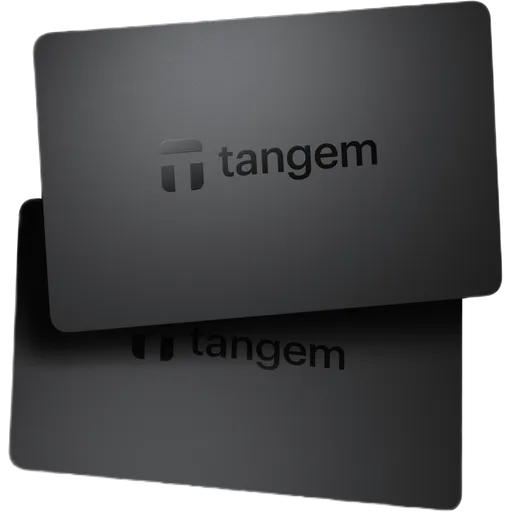
The X1’s model is unusual: instead of one secret on one device, the key is split via Shamir Secret Sharing across the Vault and four NFC cards. The Vault pairs an STM32L4 MCU with an ATECC608A secure element, and each X1 Card carries an EAL6+ NXP JCOP3 secure element; keys are non-extractable.
Firmware is open source with reproducible builds verified by WalletScrutiny, was audited by KeyLabs, and is double-signed with anti-rollback plus a genuine-device check. The PIN uses escalating lockout delays rather than an auto-wipe — but losing or wiping the Vault does not lose funds, since the shards live on the cards.
SecurityKey Factor
This is the X1’s defining feature: no seed phrase by default. On setup the key is split into a 2-of-5 Shamir scheme across the Vault and four tamper-resistant NFC cards, so losing any one card is not fatal and there is no single phrase to back up. Replacement card packs are available.
For compatibility, a standard BIP-39 seed (12/18/24 words) can optionally be imported or exported, and a passphrase enables hidden wallets.
Recovery & backups
The X1 Vault connects over USB-C (no battery) and is driven by a single 5-way joystick with a small 0.96" OLED display. Setup pairs the Vault with all four cards over NFC and the cySync desktop/mobile app (Windows, macOS, Linux, iOS, Android) and takes roughly 20 minutes.
The trade-off of the card model is logistics: you manage and store four separate cards, which is more cumbersome than a single device, and the small screen limits on-device detail.
Usability / UX
The cySync app supports 18,000+ assets across Bitcoin, Ethereum and EVM chains, Solana and more, with in-app swaps (ChangeNOW/Changelly) and a fiatbuy on-ramp, plus WalletConnect for dApps and a multi-language interface.
There is no native on-device multisig — the X1 uses Shamir Secret Sharing for distributed custody instead.
Ecosystem & integrations
No account registration is required, the Vault-to-card NFC link and the cySync channel are encrypted, and the firmware is open source and auditable. There is no Bluetooth; NFC is used only between the Vault and the cards.
The limit is network-level privacy: the X1 is USB-tethered and cySync fetches balances through Cypherock’s servers rather than your own node, so it does not offer the air-gapped, self-hosted posture of QR-only wallets.
Privacy
At $99 the Basic tier is among the cheapest ways to get an audited, open-source, secure-element wallet — and a seedless one at that. The higher tiers add service, not security:
X1 Standard ($179) — adds a hardcase and a 3-year warranty.
X1 Pro ($249) — adds priority support (Gold Plan).
Against Foundation Passport ($199), Trezor Safe 7 ($249) and Ngrave Zero ($398), the X1 Basic is strong value for eliminating seed-phrase risk — provided you do not need air-gapped signing.
Price & value
The Cypherock X1 takes a genuinely different approach to backup, and at $99 for the Basic tier it is one of the cheapest ways to own an audited, open-source, secure-element wallet with no single seed phrase to protect.
Buy this wallet if:
You want to remove the single point of failure of a paper or metal seed phrase — the key lives split across a Vault and four EAL6+ cards.
You value open-source firmware with verified reproducible builds and an independent audit, at an entry price well below most secure-element wallets.
You hold a broad multi-asset portfolio and want in-app swaps and WalletConnect.
Look elsewhere if:
You require true air-gapped (QR) signing — the X1 connects over USB-C.
You need native on-device multisig, a large screen, Bluetooth or a battery.
You would find carrying and storing four separate cards more cumbersome than a single device.
✓Our Verdict
The Cypherock X1 takes a genuinely different approach to backup, and at $99 for the Basic tier it is one of the cheapest ways to own an audited, open-source, secure-element wallet with no single seed phrase to protect.
Buy this wallet if:
You want to remove the single point of failure of a paper or metal seed phrase — the key lives split across a Vault and four EAL6+ cards.
You value open-source firmware with verified reproducible builds and an independent audit, at an entry price well below most secure-element wallets.
You hold a broad multi-asset portfolio and want in-app swaps and WalletConnect.
Look elsewhere if:
You require true air-gapped (QR) signing — the X1 connects over USB-C.
You need native on-device multisig, a large screen, Bluetooth or a battery.
You would find carrying and storing four separate cards more cumbersome than a single device.
Ready to buy Cypherock X1?
We may earn a commission if you purchase through our links. This doesn't affect our editorial independence.
Impermanent loss happens when asset prices in a liquidity pool diverge from external markets, reducing the value of liquidity providers' holdings compared to simply holding the assets.
Shamir Secret Sharing (SSS) divides a secret, like a crypto wallet seed, into multiple shares. A threshold number of shares reconstructs it, enhancing security as in SLIP-39 backups.
EAL Certification (Evaluation Assurance Level) from Common Criteria rates the security of hardware components, like secure chips in crypto hardware wallets. Higher levels, such as EAL5+ or EAL6+, indicate stronger resistance to attacks.
Reproducible Builds refer to the process where the same source code consistently produces identical binary outputs, ensuring verifiable and trustworthy software in blockchain and crypto projects.
Auto-Wipe is a security feature that automatically erases a device's data after a set number of failed login attempts, protecting sensitive information in cryptocurrency hardware wallets.
BIP39 is a standard for generating mnemonic seed phrases that are used to create deterministic wallets and securely back up cryptocurrency private keys.
A passphrase is an additional security layer for cryptocurrency wallets, acting as a 25th word in the BIP39 seed phrase, protecting access to hidden wallets.
Bitcoin (BTC) is the first decentralized cryptocurrency, launched in 2009. It uses blockchain technology for secure, peer-to-peer digital transactions without intermediaries.
Ethereum is a decentralized blockchain platform that enables smart contracts and decentralized applications (dApps). Its native cryptocurrency is Ether (ETH).
Solana is a high-performance layer-1 blockchain platform that enables fast, low-cost transactions using Proof of History and Proof of Stake. Its native token is SOL.
Fiat is government-issued currency, like the US dollar or euro, not backed by a physical commodity. It derives value from official decree and contrasts with decentralized cryptocurrencies.
WalletConnect is a protocol that enables secure communication between decentralized applications (dApps) and mobile wallets through QR code scanning or deep linking.
Multisig (multi-signature) is a security feature that requires multiple private keys to authorize a transaction, enhancing protection against unauthorized access in blockchain networks.
Offline Signing refers to signing cryptocurrency transactions on a device that is not connected to the internet, ensuring private keys remain secure from online threats.
A backup in cryptocurrency is a secure copy of a wallet's seed phrase or private keys. It enables recovery of funds if the original wallet is lost or damaged.
HODL is cryptocurrency slang for holding assets long-term despite price volatility, rather than selling. It originated from a 2013 forum post misspelling 'hold' as 'I AM HODLING.'
Cypherock X1 uses a certified Secure Element chip to store private keys in tamper-resistant hardware. Even if the device's software were compromised, the Secure Element isolates your keys from extraction. The firmware is open-source, meaning security researchers worldwide can audit the code for vulnerabilities. The device has been independently security audited.
What if Cypherock goes out of business?
Cypherock's firmware is open-source — even if the company disappears, the community can maintain the software. Your seed phrase works with any BIP39-compatible wallet, so your funds are always recoverable.
What if I lose my Cypherock X1?
Your cryptocurrency is stored on the blockchain, not on the device. If you lose your Cypherock X1, you can recover full access using your seed phrase on any compatible wallet. Cypherock X1 also supports Shamir Secret Sharing, letting you split your backup across multiple secure locations. Multiple backup cards are supported for redundant recovery.
How long will Cypherock X1 receive security updates?
Check Cypherock's website for the latest firmware update schedule.
Does the Cypherock X1 use a seed phrase?
Not by default. On setup the private key is split via Shamir Secret Sharing across the X1 Vault and four NFC cards (a 2-of-5 threshold), so there is no single seed phrase to back up. A standard BIP-39 seed can optionally be imported or exported.
What happens if I lose an X1 Card?
The 2-of-5 threshold means losing one card does not lose your funds — the wallet is reconstructed from the remaining cards and the Vault. Replacement card packs are available.
What is the difference between the X1 Basic, Standard and Pro?
All three are identical in hardware and security (the same Vault, EAL6+ cards and firmware). The Basic ($99) includes the Vault, four cards and a cable; the Standard ($179) adds a hardcase and a 3-year warranty; the Pro ($249) adds priority support.
Some links on this page are affiliate links. If you purchase through them, I may earn a commission at no additional cost to you. This helps support the site and allows me to continue creating detailed, independent reviews.
Our rating methodology is evolving. Ratings and assessments will be refined as we improve our scoring framework to reflect the most accurate results.
Ready to Secure Your Crypto?
Find the right hardware wallet based on your needs, budget, and security priorities.