
Secure ElementNFC13+ networks
Ledger Stax vs UKey Core 26
Ledger Stax offers a 3.7" color touchscreen. UKey Core 26 features open-source code — and costs $141 less.
2 wallets
Open-source vs Closed
$141 price gap
Quick VerdictUpdated 2026
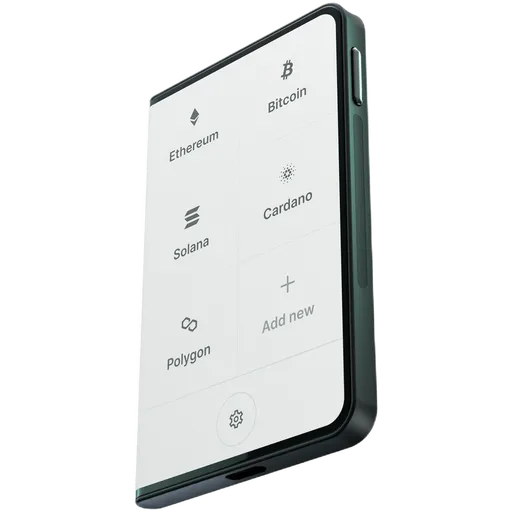
Ledger Stax
Ledger
$399

UKey Core 26
Best overall
$258
Security notice ·
October 2026: tampered Ledger devices sold through a reseller
On 9 October 2026 Ledger began investigating fund losses reported by people who had bought devices from CryptoBilis, a Southeast Asian reseller, and asked the reseller to stop selling and shipping them. On 13 October Ledger’s Donjon security team described what it found inside an affected device: a separate circuit hidden in the enclosure that read the recovery phrase off the screen during setup and sent it out over LTE through an eSIM.
According to Ledger, the implant did not modify the Secure Element, the operating system, transactions or signatures, and there is no indication that Ledger’s own systems were compromised. Ledger’s support documentation notes that Genuine Check cannot detect an added component when the original Secure Element is intact. Every confirmed loss involved a device sold by CryptoBilis; Ledger said it was still examining reports of implants in devices bought elsewhere. MediaMarkt Saturn suspended Ledger sales in Europe after a customer in Germany reported a tampered unit. On-chain researchers estimated losses above $86 million; Ledger has not verified that figure.
If you are buying or already own a Ledger device:
- Buy from Ledger directly or from a reseller on Ledger’s authorized list.
- Do not set up a device bought from CryptoBilis. If you already did, Ledger advises moving your assets to a new device with a newly generated recovery phrase.
- If you lost funds, Ledger asks you to contact law enforcement before opening the device.
The incident concerns how devices reached buyers, not the device design, so it does not change our ratings. We will update this notice as Ledger publishes its findings.
Sources
Open-formula rating|40+ criteria analyzed|Last updated October 2026|No sponsored rankingsSee methodology
Key Takeaways
- UKey Core 26 wins in security (92/100)
- UKey Core 26 wins in ease of use (78/100)
- UKey Core 26 is more affordable ($258)
- Both support 50+ cryptocurrencies
- Best for beginners: UKey Core 26 (easier setup)
Ledger Stax vs UKey Core 26: Key Differences
Both Ledger Stax and UKey Core 26 can keep your crypto safe — the real question is which one fits the way you actually use it. We've put both through our open-formula scoring on 40+ criteria: Ledger Stax (Ledger) lands at 71/100, UKey Core 26 (UKey) at 71/100. The $141 gap between $399 and $258 isn't arbitrary — these are two different bets on what matters in a hardware wallet, and the right pick depends on which bet you'd take.
Winner by Category
Which wallet leads in each area
Security
Ledger Stax83/100
UKey Core 26Winner92/100
Ease of Use
Ledger Stax66/100
UKey Core 26Winner78/100
Price
Ledger Stax$399
UKey Core 26Winner$258
Coin Support
Ledger StaxWinner100+
UKey Core 2650+
Privacy
TieLedger Stax39/100
UKey Core 2638/100
Beginner Friendly
Ledger Stax66/100
UKey Core 26Winner78/100
Comparing:
Ledger Stax
UKey Core 26
Comparison Table
Key specifications for your decision
| Criteria | Ledger Stax Ledger $399 | UKey Core 26 UKey $258 |
|---|---|---|
Overall Rating | 71 | 71 |
Security | 83 | 92 |
Usability | 66 | 78 |
Price | $399 | $258 |
EAL Certification (Evaluation Assurance Level) from Common Criteria rates the security of hardware components, like secure chips in crypto hardware wallets. Higher levels, such as EAL5+ or EAL6+, indicate stronger resistance to attacks. Learn more | Yes | Yes |
Open Source Firmware refers to firmware in hardware devices, like wallets, where the source code is publicly available, allowing transparency, auditability, and customization. Learn more | Firmware, in part | Firmware |
Bluetooth Connectivity enables wireless communication between devices, like hardware wallets and smartphones, using Bluetooth or Bluetooth Low Energy (BLE) for secure data transfer. Learn more | Yes | Yes |
USB | Yes | Yes |
Networks | 100+ | 50+ |
A passphrase is an additional security layer for cryptocurrency wallets, acting as a 25th word in the BIP39 seed phrase, protecting access to hidden wallets. Learn more | Yes | Yes |
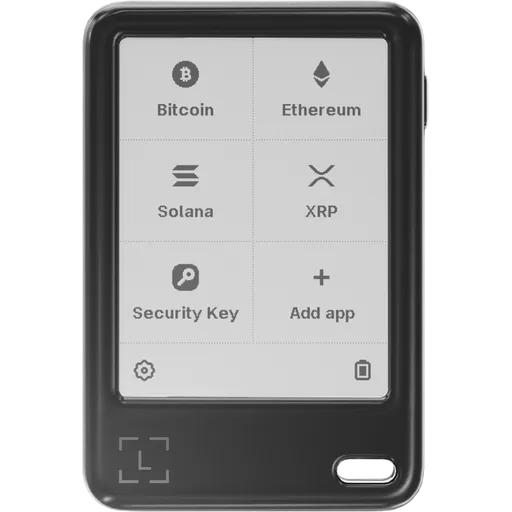
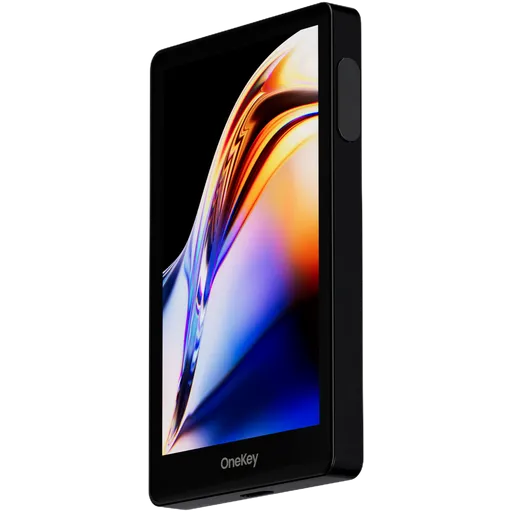
A touchscreen display is a screen that allows users to interact with a device by touching the surface, commonly used in hardware wallets for easy navigation and transaction confirmation. Learn more | Curved E Ink Touchscreen, 16 Grayscale, 400 X 670 Px | Color Touchscreen, 480 X 800 |
Recovery is the process of restoring access to a cryptocurrency wallet using its seed phrase or mnemonic backup if the original wallet is lost or inaccessible. Learn more | 24-word seed | 24-word seed |
Setup Time | ~15 min | ~10 min |
IP Rating refers to the level of protection a device has against dust and water, often used for hardware wallets to indicate their durability in various environments. Learn more | None | None |
Our Verdict: Ledger Stax or UKey Core 26?
Choose Ledger Stax if...
- You trust third-party audits (ANSSI (CSPN)) over open-source review
- You run your own Bitcoin full node
Skip Ledger Stax if...
- ×Open-source firmware is non-negotiable for you
- ×Budget is tight — you'd be better served by a cheaper option in this comparison
Choose UKey Core 26 if...
- You want verifiable, open-source firmware and software
- You want to save $141 without sacrificing core security
Our pick for most users
Both wallets score similarly (71 vs 71/100) — your choice depends on which features matter most to you.
Bottom line: UKey Core 26 is our pick — it leads on both security and ease of use, and the overall score reflects that. If budget is real, UKey Core 26 comes in $141 cheaper without giving up the basics.
Price: Ledger Stax vs UKey Core 26
Ledger Stax costs $399, while UKey Core 26 is priced at $258 — a $141 difference. The extra cost of Ledger Stax gets you a 0-point higher overall rating. For budget buyers, UKey Core 26 offers solid security at a lower price point.
Who Should Pick Which Wallet
Recommendations based on real-world use cases
Ledger Stax
$399Best for:
Built-in batteryCoin controlFull node supportWalletConnect support
Pros
- +ST33K1M5 secure element (CC EAL6+) plus a device-level ANSSI CSPN certificate issued in 2025
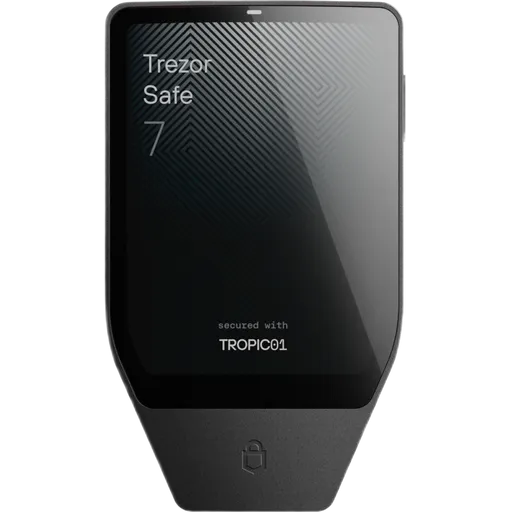
- +3.7-inch curved E Ink touchscreen (400 x 670 px) shows transaction details at a readable size
- +Ledger Recovery Key NFC card included as a second, PIN-protected backup next to the 24-word phrase
- +Ledger Wallet app and the device apps are open source and published on GitHub
Cons
- −Ledger OS on the secure element is closed source and has no reproducible builds
- −No tamper-evident seal; Genuine Check cannot detect added hardware, as the Oct 2026 reseller case showed
- −No air-gapped QR or microSD signing: every transaction passes through USB or Bluetooth
- −At $399 it costs $150 more than the Ledger Flex ($249), which uses the same secure element
UKey Core 26
$258Best for:
Built-in batteryWalletConnect supportAndroid supportiOS support
Pros
- +Large 3.5-inch 480 × 800 color touchscreen, with optional fingerprint unlock
- +Firmware source published on GitHub (v1.5.0, GPLv3/LGPLv3/MIT); images are signed 4-of-7
- +Four chips: two ACL16 secure chips plus UKey's in-house UKS-101 and UKS-102
- +QR Air-Gap mode switches off Bluetooth, USB and NFC for Bitcoin and EVM signing
Cons
- −No independent security audit or reproducible builds yet; UKey describes both as planned
- −EAL6+ is vendor-stated: no certificate published, and the ACL16 chip maker is not disclosed
- −The UKey Wallet companion app is closed source
- −Optional Turbo mode (EVM, Solana) shows only the network on screen, not transaction details
Best for These Profiles
Pre-Purchase Checklist
Important points to verify regardless of your choice
All wallets ship from official manufacturer stores with full warranty.
Ledger Stax vs UKey Core 26: Frequently Asked Questions
Answers about Ledger Stax vs UKey Core 26
Is Ledger Stax better than UKey Core 26?
On the numbers, Ledger Stax comes out ahead — 71/100 vs 71/100 — but 'better' isn't quite the right frame. UKey Core 26 is more affordable at $258, which matters more for some buyers than overall score does. If overall rating is what you actually weigh first, take Ledger Stax. If budget is the constraint that shapes your decision, UKey Core 26 is the smarter buy. Either way, both are real hardware wallets — neither is a mistake.
How much do Ledger Stax and UKey Core 26 cost?
Ledger Stax costs $399, UKey Core 26 costs $258. These are list prices for the standard edition from official manufacturer stores. A few things worth knowing: hardware wallet prices barely move during the year, so 'waiting for a sale' rarely pays off — Black Friday is the one exception, with 10–20% off being typical. Avoid third-party listings even if they're cheaper; the supply chain risk on a tampered device wipes out any savings the first time you load funds. And don't buy a 'used' hardware wallet, ever — even if it claims to be reset.
Which wallet is better for DeFi and Web3: Ledger Stax or UKey Core 26?
Ledger Stax — and the gap is bigger than the spec sheets make it look. Ledger Stax has WalletConnect built in, which means you sign DeFi transactions directly from a hardware wallet without exposing keys to a hot wallet. UKey Core 26 can technically work with DeFi via third-party software, but every extra step is one more place an attacker can intercept the transaction you're approving. If you're going to be clicking 'Sign' on smart contracts more than once a month, the difference compounds fast.
Ledger Stax vs UKey Core 26: which has better backup options?
Ledger Stax uses a standard 24-word seed phrase. UKey Core 26 uses a standard 24-word seed phrase. Both work — but they reflect different ideas about what 'backup' should be. The seed phrase approach (BIP-39) is the open industry standard: portable across most wallets, well-documented, and recoverable on any compatible device. The downside is well-known too — it's a piece of paper that's a single photograph or careless moment away from disaster. Card-based backups can't be photographed and don't write themselves down, but they're proprietary, which means you trust one manufacturer to stay in business and keep the format alive. Pick based on which failure mode worries you more.
Is UKey Core 26 more secure than Ledger Stax because it's open-source?
Not automatically — and this is a more nuanced question than the marketing suggests. Open-source (UKey Core 26) lets anyone (researchers, hobbyists, paranoid users) read the firmware and verify there are no backdoors. That's the strongest possible trust signal. Ledger Stax keeps source code private but compensates with paid third-party audits from ANSSI (CSPN) and certifications like CC EAL5+/EAL6+ on the secure element. Open-source is the more transparent posture; audited closed-source can still be cryptographically airtight. Our honest take: if open-source is the deciding factor for you philosophically, pick UKey Core 26 — but don't dismiss Ledger Stax as 'less secure' purely on that basis.
Where to buy Ledger Stax at the best price?
Always buy Ledger Stax from the official Ledger store — never from Amazon, eBay, or third-party marketplaces, even if the price looks better. Hardware wallets have been physically tampered with in the supply chain before (compromised devices shipped to unsuspecting buyers, then drained the moment funds were loaded). Buying direct from Ledger gets you a sealed unit with full warranty, firmware integrity, and a clean chain of custody. Free shipping and occasional discounts at the source make the price difference negligible anyway.
Do Ledger Stax and UKey Core 26 come with a warranty?
Yes — both ship with a manufacturer warranty (typically 1–2 years) when bought from the official store. That said, a hardware wallet warranty is mostly about hardware defects, not lost funds. If the device fails, the manufacturer will replace it — but your seed phrase or backup cards are what actually restore your crypto onto the new device. The warranty is real but secondary; what protects your funds is your backup discipline, not a piece of paper from {{wallet1}} or {{wallet2}}.
Made your decision?
Check out full reviews or find the best price from official vendors.
View best priceAffiliate link — we may earn a commission at no extra cost to you. Learn more
Not convinced? Consider these alternatives
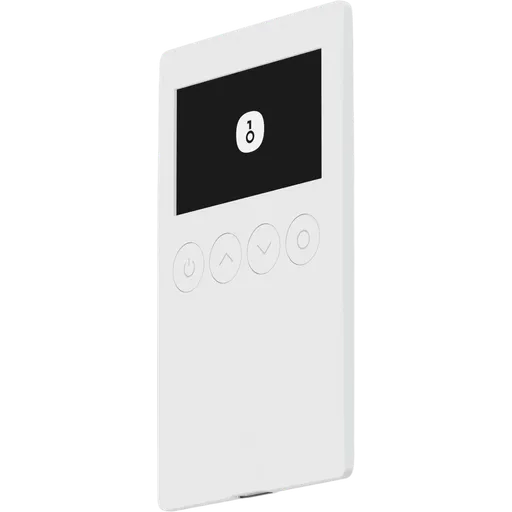
Secure ElementOpen SourceUSB100+ networks
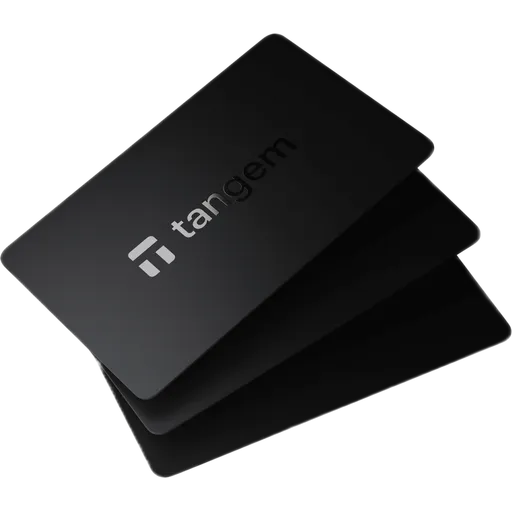
Secure ElementNFC100+ networks
More Comparisons
Compare Ledger Stax with other wallets
Official store
Ledger Stax$399 · 71/100
UKey Core 26$258 · 71/100
Affiliate link — we may earn a commission at no extra cost to you. Learn more